

The term “maritime museum” may conjure up images of a dark, lonely, cobwebbed warehouse at the end of a pier, full of moldy nets, ships in bottles, “treasures” of dubious value, and salty seamen missing various appendages but with cool hats and beards.
But the Poulsbo Maritime Museum could not be further from that caricature. The downtown museum is packed with hundreds of restored items, and there were no peg legs, eye patches, or hooks in sight during a recent visit.
The museum was formed in 2010, and ensconced in its current location in 2011. Curator Judy Driscoll explained that the museum, along with the Poulsbo Heritage Museum, located next door at 19020 Front Street, is owned and operated by the Poulsbo Historical Society. The collections include restored early outboard motors and displays depicting historically and locally significant vessels, like the Hyak of the Puget Sound Mosquito Fleet.
Central to the museum’s formation was Poulsbo’s Shields family. Ed Shields owned the last three commercial, sailing, fishing vessels home-ported in Poulsbo—the Charles W. Wilson, the C.A. Thayer and the Sophi Christensen. His sons, Jim and Dave, longtime members of the historical society, were instrumental in the creation of the Maritime Museum. The brothers are still very active in both.
The Maritime Museum boasts nearly 90 volunteers who donate varying amounts of time and energy to keep nearly the entirety of its operations, maintenance, research and outreach efforts going—not only for the Maritime Museum but for the Heritage Museum, and the Martinson Cabin, also run by the society. There are only 1.5 full-time paid workers.
The museum is open seven days a week, has an ongoing need for maintenance, creation of new and updated exhibits, grant applications, business processes, and every other aspect of operating a facility. Driscoll said the operation can always use more volunteers.
A recent example of a project that demands a surprising amount of resources was the relocation of a 17-foot cod fishing dory from the lobby of Poulsbo City Hall to the museum’s “Boat Yard.” The dory was donated by Ed Shields, from the vessel C.A. Thayer to the Museum of History and Industry, until it was re-assessed to the Historical Society. Originally sited in City Hall, the museum’s original location, the dory remained there even after the Maritime Museum moved. In July, the dory was relocated about a block away. The process took tens of volunteers, the removal of doors, trucks, and weeks of planning. Driscoll said that “‘all of these efforts require manpower.”
The museum attracts about 32,000 people annually, and around 7% are international in origin. Many guests wind up in Poulsbo as a side trip from their visit to Seattle, such as Tyson Johnson and Luciana Vargas, who were in town for a wedding.
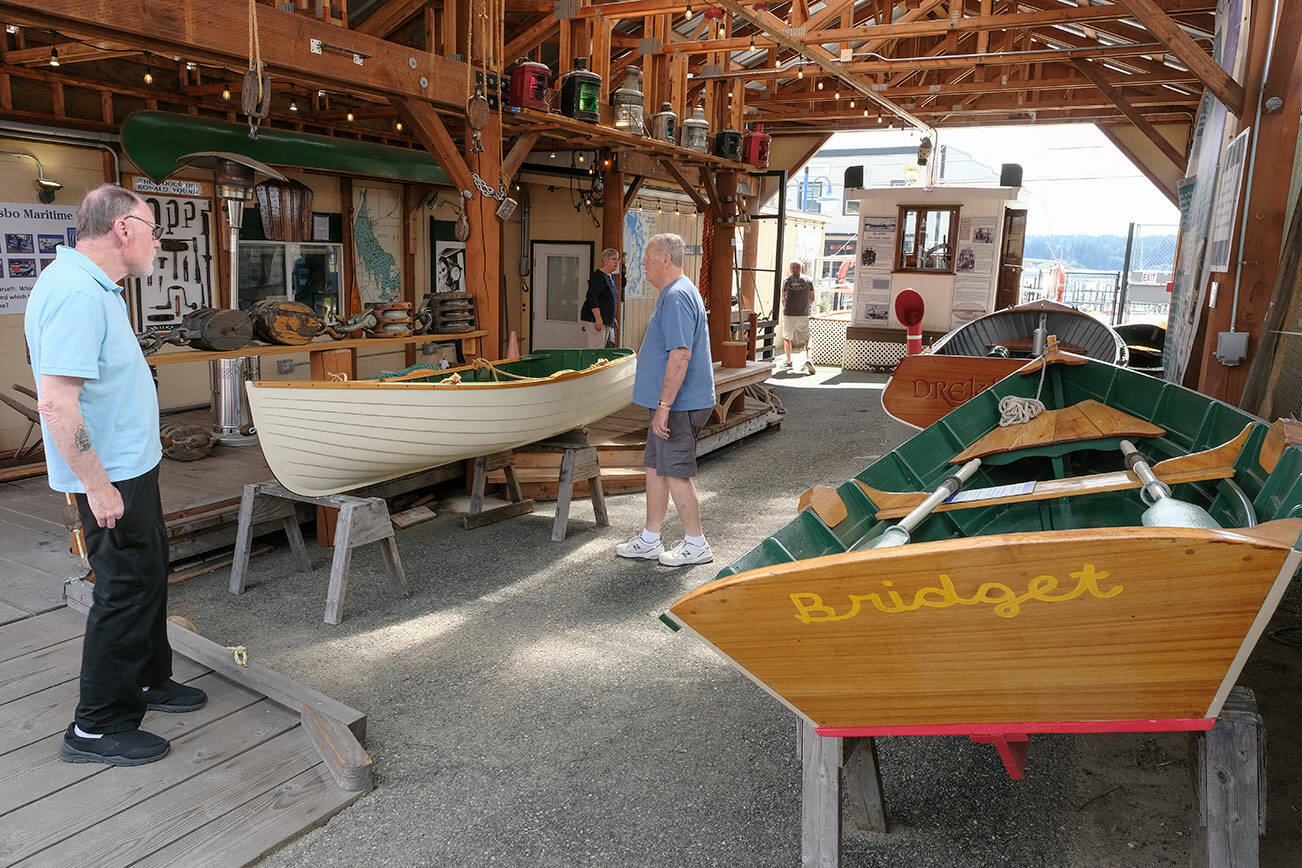
The ‘Boat Yard’ is adjacent to the Maritime Museum.
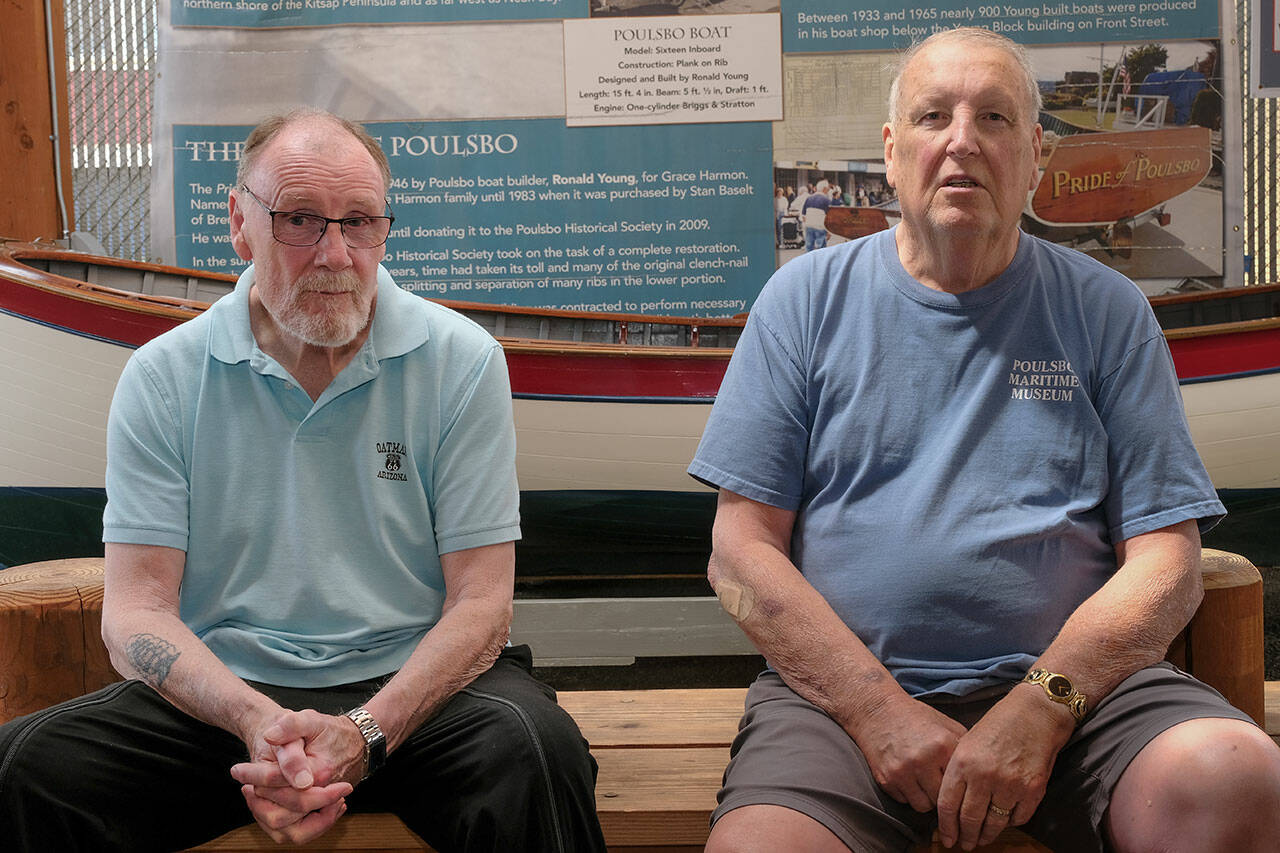
Brothers Dave, left, and Jim Shields, longtime members of the Poulsbo Historical Society, were instrumental in the creation of the Maritime Museum.
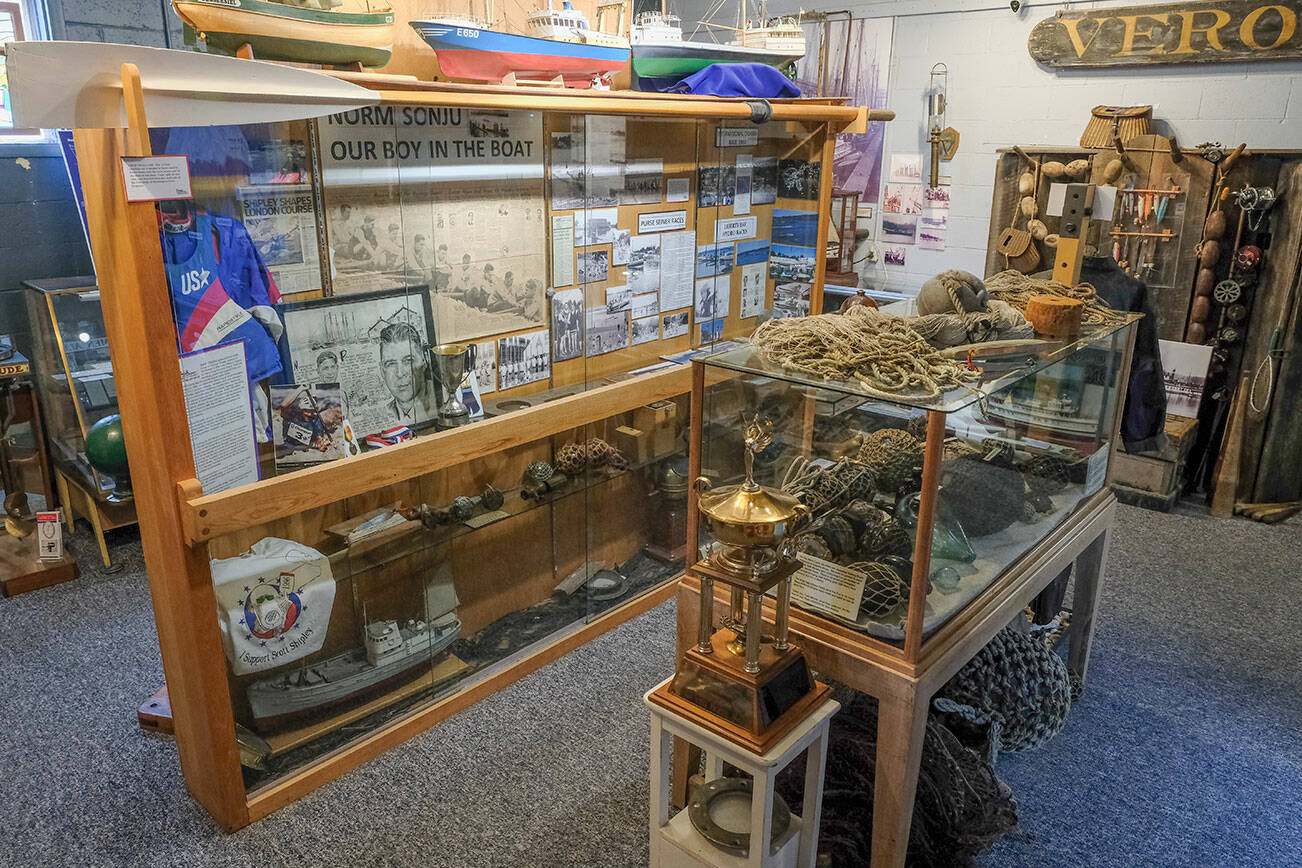
Maritime artifacts in display cases at the museum.