
Tee time?
Published 8:00 am Sunday, July 2, 2006
If you’ve lived in North Kitsap for any length of time, you’ve probably heard of the White Horse Golf Community and know some part of its story. Maybe you know that Bob Screen, the visionary behind White Horse, has something of a family history with golf course development (his grandfather designed a course in Ottumwa, Iowa at the turn of the century).
Or perhaps you’ve heard that it was Screen’s 1988 search for cheap pasture for his daughter’s horse – which was not white – that led to his initial encounter with the 486 acres that is now White Horse. (Screen didn’t originally plan to create a golf community in North Kitsap, but he knew horses didn’t care about panoramic views, and he sensed the property could be more than timberland.)
If you follow local politics, you know this project has involved years of planning, hours of public and private meetings, and a whole lot of work by many folks. But what you probably don’t know yet – unless you’ve had the chance to take a tour – is how well-integrated and distinctively Northwest this almost-finished golf course is turning out to be.
Screen didn’t want to end up with a “Disneyland†golf course whose beauty was manufactured elsewhere and imposed on the site. Instead, his vision focused on playing up, and playing off, the physical assets that were already there: second-growth stands of mixed deciduous and fir trees, gently rolling hills and sweeping territorial views.
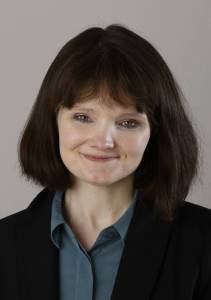
Cynthia Dye McGarey, architect of the White Horse golf course, shares this philosophy. She’s brought a light touch and a keen eye for detail to every aspect of the design, creating an aesthetically stunning course that requires thinking off every tee, for amateurs and pros alike.
Now, as the final greens are being seeded and the course heads into its finishing phase, it shimmers with the ambience of the Pacific Northwest. Snags, salal and deer fern overhang the fairways. Here and there, small stands of cedars dot the roughs. Cobalt lupines are in full bloom with orange poppies beginning to emerge in a counterpoint to the lupine’s intensity. As you meander along the golf paths through groves of trees and across the wetland, the challenges and delights of the course unfold.
Of course, playing is the ultimate test of any golf course and in the coming years, folks throughout the region will have a chance to do just that. But the overall experience will come from more than just the game: it will be the emergent quality of site, design, and the many people who made it happen. By offering the rigors of championship golf within the context of a native ecosystem, it appeals to players’ sense of place and their spirit of play. This was intentional.
“If it’s beautiful,†noted Dye McGarey, “they forgive you.â€
World-class golf, North Kitsap ambience
The 7,186 yard, par 72 championship golf course at White Horse is expected to open later this year. Other amenities still in the planning stage include a clubhouse and restaurant, tennis courts, and an inn. Key features of the course include:
Five sets of tees for each hole – No matter what your skill level, you can play White Horse. Long hitters and those with a lot of experience can choose a back tee; young folks or those with less experience can start closer to the green. But don’t assume the closer tees are without their trials: challenges are incorporated for every level of player.
Tremendous movement on the fairways – At White Horse, one of the world’s top “shapers†was brought in to execute Dye McGarey’s course contours. These contours keep ball movement unpredictable and afford multiple challenges for players. For those who play often or for whom this will be a home course, this means the ball will lie very differently each time you play.
Subtle contouring on the greens – To the untrained eye, and in comparison to the fairways, golf greens look deceptively level. But don’t be fooled: subtle greens contouring creates surprising levels of difficulty at each hole; this is a particular area of emphasis for Dye McGarey. This feature means the course will continue to offer new challenges for all, across the seasons and over the years.
A double-ended practice range – Like to practice your swing in the morning? Or are you an evening player? Whatever your preference or schedule, the flexible orientation of the practice range ensures the sun will always be behind you.
A teaching green – Featuring six target greens and a variety of bunkers, the teaching green is within easy walking distance to holes 16 (par 5), 17 (par 3) and 18 (par 4) so golfers can take their skills – and their golf pro – out for some live action coaching.
For more information about the White Horse championship golf course, including a card of the course map, to www.whitehorsegolfcommunity.com or call (360) 297-4468.



Best of Kitsap