
Kitsap considering tax increase, staff layoffs to cut budget deficit
Published 1:30 am Thursday, June 25, 2026
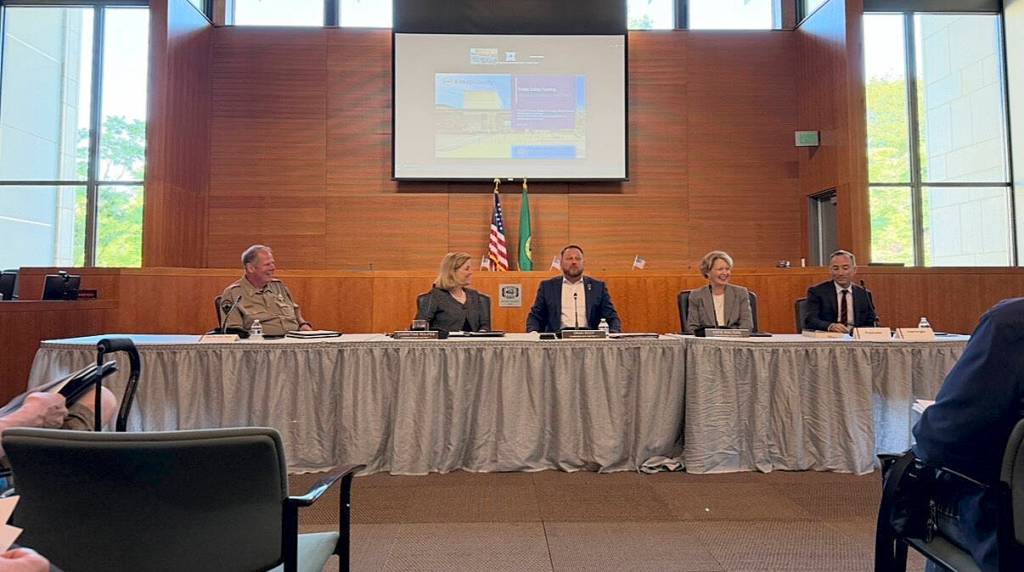
For the third time in recent weeks, Ryan Engdahl found herself sitting in a Kitsap County budget meeting, listening closely and taking notes.
The Poulsbo resident attended all three county town halls because she wanted answers.
As Kitsap County officials warn of a looming $9.8 million budget gap in 2027, Engdahl said she worries about what the county’s financial challenges could mean for public safety and for her children.
“I’ve been coming trying to understand why we’re in the position that we are,” Engdahl said after the June 22 meeting at the Kitsap County Administration Building in Port Orchard. “I want more for our county, I want more for our sheriff’s department…and I want more for our citizens.”
Her concerns echoed many of the themes discussed during the county’s third and final budget town hall, where county commissioners outlined difficult decisions ahead, such as a possible sales tax increase and potential staff cuts, as expenses continue to outpace revenue.
Per County Commissioners Oran Root, Christine Rolfes and Katie Walters, Kitsap County is facing a projected $9.8 million budget shortfall in 2027. The gap is largely driven by rising labor costs, increases to the jail medical services contract and growing overtime costs within the sheriff’s office.
Budget manager Kristofer Carlson said the county’s revenues simply are not growing at the same pace as expenses.
“Property tax only increases by one percent,” Carlson said. “Then there’s the new construction component of property tax that amounts to about an additional one percent on average.”
Meanwhile, county expenses continue climbing.
County projections show expenses increasing roughly 7% between 2026 and 2027, even while maintaining the same staffing and service levels. Public safety and judicial services account for most of the increase, with those departments needing an estimated $7.5 million more in 2027 than they did in 2026.
If no action is taken, county officials estimate annual revenue would grow only 2% to 3%, while expenses would rise from about $138 million to nearly $160 million within three years.
District 2 Commissioner Root said transparency was the primary reason for hosting the town halls.
“The public is out in their jobs, in their schools, doing what they’re supposed to be doing while they elect us to come here and manage the budget,” Root said. “But it’s gotten to a point where they need to know what’s happening.”
The county currently has about $39 million in reserves, but officials project those reserves could be depleted by the end of the decade if no changes are made.
To address the deficit, county leadership has presented two primary options.
The first would implement a one-tenth of 1% sales tax increase authorized under House Bill 2015. County estimates show the increase would cost the average resident between $20 and $40 annually while generating roughly $7.7 million in additional revenue each year.
Under that scenario, reserves would last until approximately 2031 rather than being exhausted by 2029. Revenue in 2029 would increase from an estimated $141 million to roughly $149 million.
The second option would reduce county spending through workforce reductions. County estimates show between 45 and 60 positions could be eliminated, lowering projected expenses to approximately $152 million by 2029 compared with nearly $160 million if no action is taken.
But Root emphasized those are only starting points.
“We’re looking at all options,” Root said. “The one-tenth of 1% sales tax increase is an option. Cutting personnel, layoffs, (reduction in forces) is an option. Doing a hybrid of all of those is an option. These three town hall meetings gave us a lot of feedback from the public on what they’re expecting from us,” he said.
The meetings also included participation from outgoing Sheriff John Gese and Kitsap County Prosecutor Chad Enright. Both expressed concern about the impact additional cuts could have on county services.
Enright warned attorneys could face larger caseloads if staffing levels decline, while sheriff officials discussed the possibility of prioritizing calls for service if resources become more limited.
County departments will submit budget requests later this summer, followed by budget hearings in September. Commissioners are expected to adopt a final budget in December, with any changes taking effect Jan. 1, 2027.
For Engdahl, however, the discussion goes beyond spreadsheets and projections. While she opposes both options currently being discussed, she said her goal remains simple.
“I am hoping that we can take a better look at the budget and redirect funds,” Engdahl said. “Instead of asking for more funds, redirect them properly so that way our sheriff’s department is very well taken care of.”
Nathan Hyun is a freelance reporter for Kitsap News Group.




Best of Kitsap