
Expert discusses effects of gambling addiction and how to treat it
Published 1:30 am Wednesday, October 29, 2025
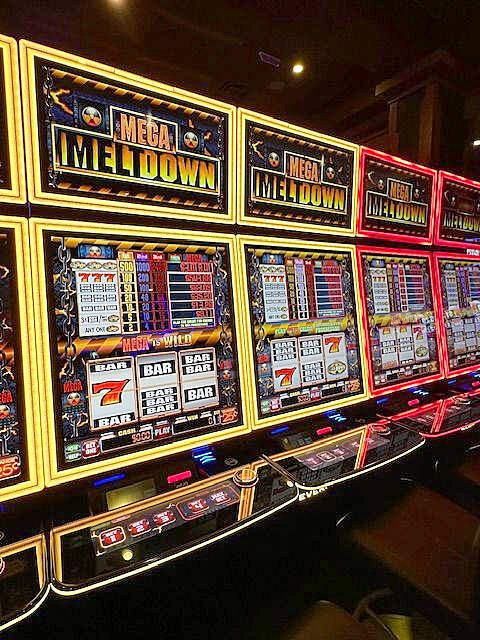

In order to gamble, it used to be that one had to travel to the neon-lit city of Las Vegas. Today, slot machines and blackjack tables are commonplace in Kitsap County and communities across the nation. Two local tribal casinos and a cardroom beckon patrons to place wagers with the hope of a big payoff.
Expanding gambling avenues, including buying scratch tickets at the neighborhood convenience store and on-line gambling, have come with a dark side.
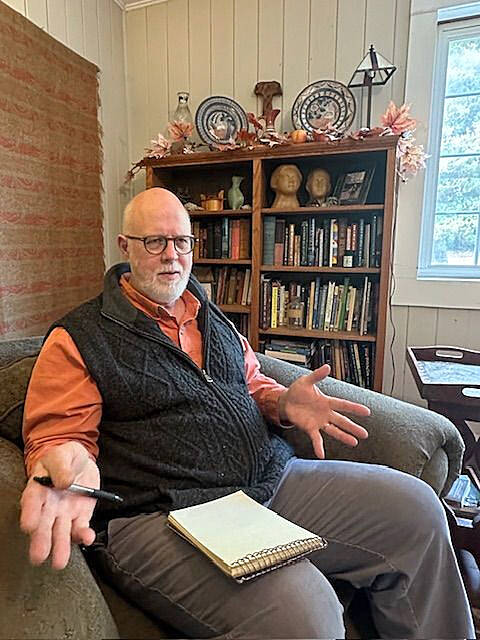
“Opportunities for gambling are increasing. As the opportunities increase, there’s going to be an increase in problem gambling,” said Tom Axtelle, a certified international gambling counselor who works at the Suquamish Tribe Wellness Center.
Axtelle works with those whose lives have been torn apart by gambling addiction. Among his clients slot machines are the game of choice.
Problem gambling affects somewhere between 80,000 and 160,000, or 2 to 4% of adults in Washington, per the Evergreen Council on Problem Gambling.
Youth are also impacted. Nearly 15% of Kitsap County high school seniors said gambling caused them problems at home, school or with friends in the past year, says the 2023 youth survey of the state Health Care Authority. Two years ago, the NCAA published a study on the surge of gambling on college campuses. It found that 67% of students living on campus bet on sports.
Problem gambling can have significant impact on a person’s life, affecting their emotional well-being, finances and relationships, Axtelle said. Individuals can experience anxiety and depression, which can lead to strained family ties and financial hardship. Such challenges can impact work performance and overall quality of life.
“Many of my clients will come in and are in a desperate place,” Axtelle said. “They have been borrowing from family members to gamble and then losing that money. Then they are trying to pay the rent and can’t afford to do that. The family is wondering, ‘Why is he not paying me back?’ Often it’s a case of a person can’t hide it anymore. They’re exposed. That exposure can be a really low point,” he said.
Types of gamblers
There are three types of gamblers, Axtelle noted.
“One is a person drawn to risk or thrill seeking. Others are escape gamblers, similar to those with other substance use disorders. Gambling allows them to escape from uncomfortable emotions. Women tend to be more escape gambling types. Then, there is the habituated person who gets enough exposures and before long it becomes a habit,” he said.
Mental illness is often associated with a person succumbing to gambling addiction, he said.
“We know that anxiety and depression are the most common mental health symptoms that people experience. Folks who have those issues are more prone to want to seek to avoid those feelings,” he noted.
There are a number of ways a recreational gambler can become a problem gambler, the counsellor said.
“Sometimes a person might come in and have a really positive gambling experience. They win. They feel like a winner. That experience is so overwhelming that despite the fact that their losses far out exceed their wins, they continue to chase that original feeling,” he said.
Spending more time feeding money into a slot machine or playing roulette is a red flag, Axtelle said.
“It can get to the point where someone with a more extreme gambling disorder, might stay up hours and hours playing without sleeping. They might forget to eat. When you’re in a casino, there’s no windows. It could be night or day and you wouldn’t know the difference. Self-care goes down the hill,” he said.
There are instances where family dynamics can lead to addiction.
“A problem gambler might start out where it’s normalized in their family. That’s a lot of the ways that family members enjoy their time together. They might gamble at home with card games or families will go together to a casino. At first, it’s just fun. But at a certain point, a person might increase the time that they spend there. They set limits on how much they’re going to spend, but they break those limits,” he said.
Family members are also impacted by a person’s gambling habit. “I’ve worked with couples where the spouse also comes in. We do a version of couples counseling because it impacts the family. It’s not just the money that’s problematic. More often than not, what’s really damages the relationship is the lying and hiding.”
Compulsive gambling can also lead to another dire consequence.
Research has shown that those struggling with problem gambling have a higher rate of suicide than people struggling with alcohol or drug addiction. National suicide rates in the general population is 2%, but it goes up to around 9% for individuals with substance use disorders and can increase to 20% for those with gambling disorders, Axtelle noted.
Battling the addiction
Often when Axtelle works with a client the goal is to determine what drives the person to repeatedly lay out cash on bets.
“Treatment isn’t just focused on abstinence from gambling. Often, we start by looking at what gambling has been doing for you? How does it serve you? Is there a need that’s not being met?” he said.
For example, if a compulsive gambler is suffering from anxiety and depression, the goal will be to develop ways to manage those feelings. If the draw is risk taking and thrill, the aim can be to find other ways for the person to experience those feelings.
There are number of steps someone can take if they have a gambling problem, Axtelle said.
One is the person can ban themselves from a casino. This involves going to a casino and entering into an agreement with staff to self-exclude from the property.
“If they show up later, (many casinos) have their facial recognition. The person risks being fined or being arrested. If they somehow get past security and were to win, they would not be able to collect their winnings,” he said.
No-cost individual gambling counselling is available through Suquamish Tribe Wellness Center, phone: 360-394-8558.
The person can also turn to recovering gamblers for support. Gambler Anonymous (GA) meetings are held in Poulsbo and Port Orchard. Like AA meetings, attendees follow the 12 steps of GA. For time and locations of meetings, go to: gamblersanonymous.org. Online meetings are listed on gamblersinrecovery.com.
Help is also available by calling the Washington State Problem Gambling Helpline 1-800-547-6133 or the National Problem Gambling Helpline 1-800-522-4700.



Best of Kitsap