
Reaction mixed as community hears school bond presentations
Published 1:30 am Tuesday, March 7, 2023
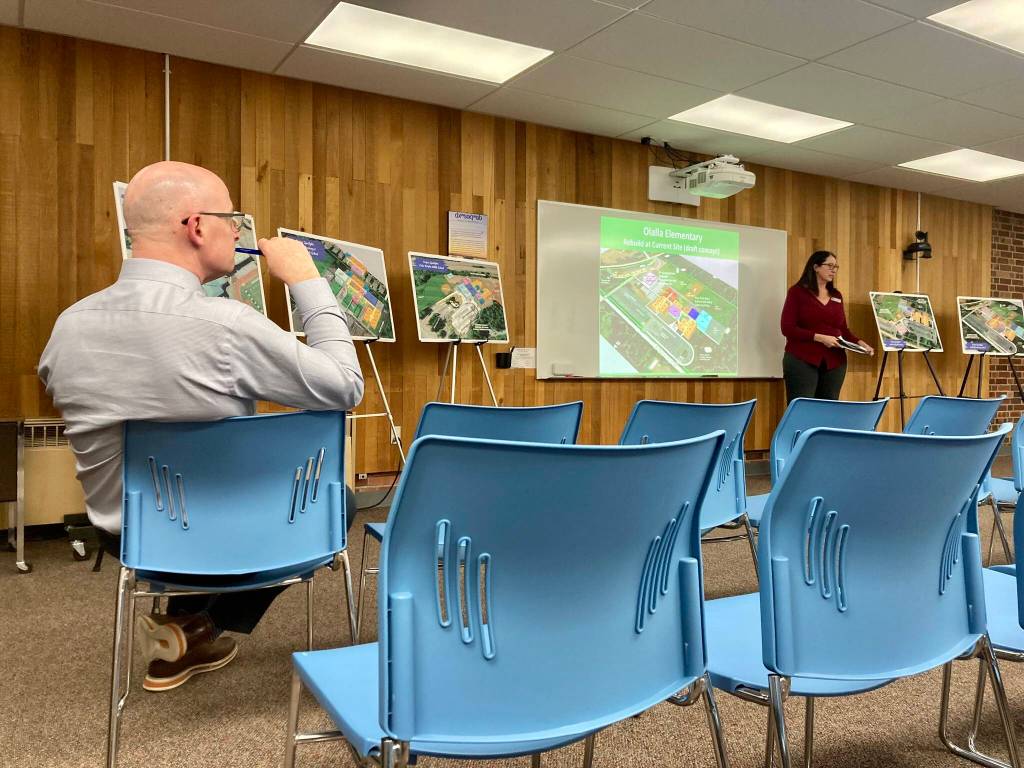
A lack of attendance, budget cuts and other voter concerns could once again come back to bite the South Kitsap School District as it begins community presentations on its tentative $271 million bond.
School leadership gave their latest update Feb. 27 on a bond that is intended to make major modifications and repairs to five schools. They include: replacing South Colby Elementary ($50.7 million), Olalla Elementary ($48.3 million) and Cedar Heights Middle ($83.6 million), as well as funding the move and redevelopment of Explorer Academy and Discovery High ($26 million) and making major updates to South Kitsap High ($39.5 million).
Superintendent Tim Winter and public information officer Amy Miller centralized their newest arguments in favor of the bond on the topics of safety and opportunity. They said with safety already “a top priority,” the projects would allow the district to take further strides in that mission by eliminating around 32 portable classrooms.
“That’s a lot, and we talk about making our schools safer. Putting them all under one roof is a big part of that,” Winter said.
The opportunity argument for students was largely connected to the vocational classrooms of the district. Sara Hatfield, director of Career and Technical Education, talked about how big of a role the classes she directs play in students’ lives but also admitted the district has issues adapting to modern technology standards.
“As the marketplace changes, the equipment changes. They have different needs. So, now we can’t even put a 3D printer in a classroom without ventilation or attached ventilation to it. This [bond] would allow us to be able to open up some of that capacity,” she said.
It was hard to tell how well the presentation was received by community members as, aside from school board, those presenting the bond and other bond and school affiliates, the attendance ranged in just the single digits. Winter additionally reported that around 20 people attended a virtual presentation. “I would expect, as we get closer to November, we would see more,” he said. “We’re really early in this process.”
However, when voters like Jaime Cross, a regular attendee of school board meetings, walked in during the later half of the presentation, he said the lack of people was both surprising and not. “It makes me concerned that they’re pushing so hard for this, and it doesn’t seem like there is a lot of community support,” he said.
Cross has already said he will not vote for the bond, especially following news that the district is expected to make nearly $10 million in budget cuts this summer due to less enrollment and the expiration of COVID-19 ESSER funds. While Winter again said the budget troubles are not just a district but a state issue, Cross said that’s not true.
“They knew those (ESSER) funds would be running out, yet they voted the teachers a raise last year and continue to be way overstaffed,” he said. “Enrollment is down because parents have lost trust in the school system in this state and are moving to other states or funding other schooling options.”
The district looks to end a 30-plus year drought of zero bonds being passed by the community, including attempts to build a second main high school. It’s something that William Fairgrieve said he has watched as a citizen, and while he doesn’t need convincing that district-wide improvements are needed, he believes the district needs to figure out who it’s trying to cater to. “The people that need to be convinced that they need those things are people that have kids that are five years old or four years old because they’re going to be living with what happens over the next twenty years as these things occur,” he said.
John Olson, who moved from Poulsbo to Port Orchard over a year ago, added that additional campaign efforts should be used toward those who have voted no before and groups such as seniors who don’t have as much of a stake in the schools. “You don’t have to get all of those 40 percent that always vote no. You just need to get a few,” he said. “To me, if I was a bond consultant, I would be figuring out a way to target those people.”


Best of Kitsap