WSF engine room workers concerned over high OT rates, pay disparity
Published 1:30 am Friday, June 19, 2026
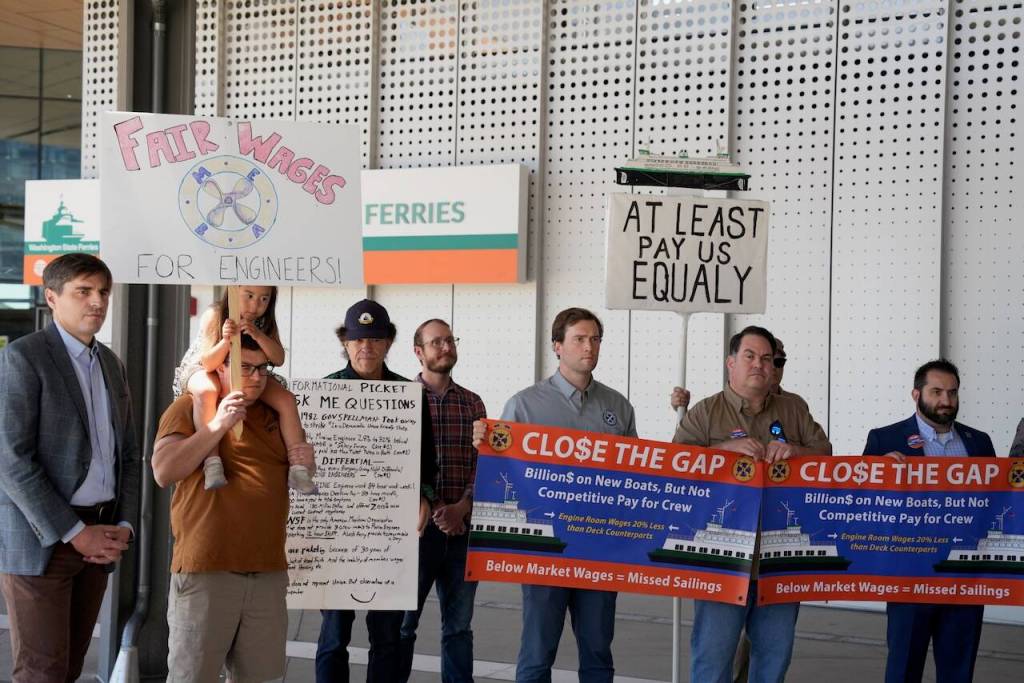
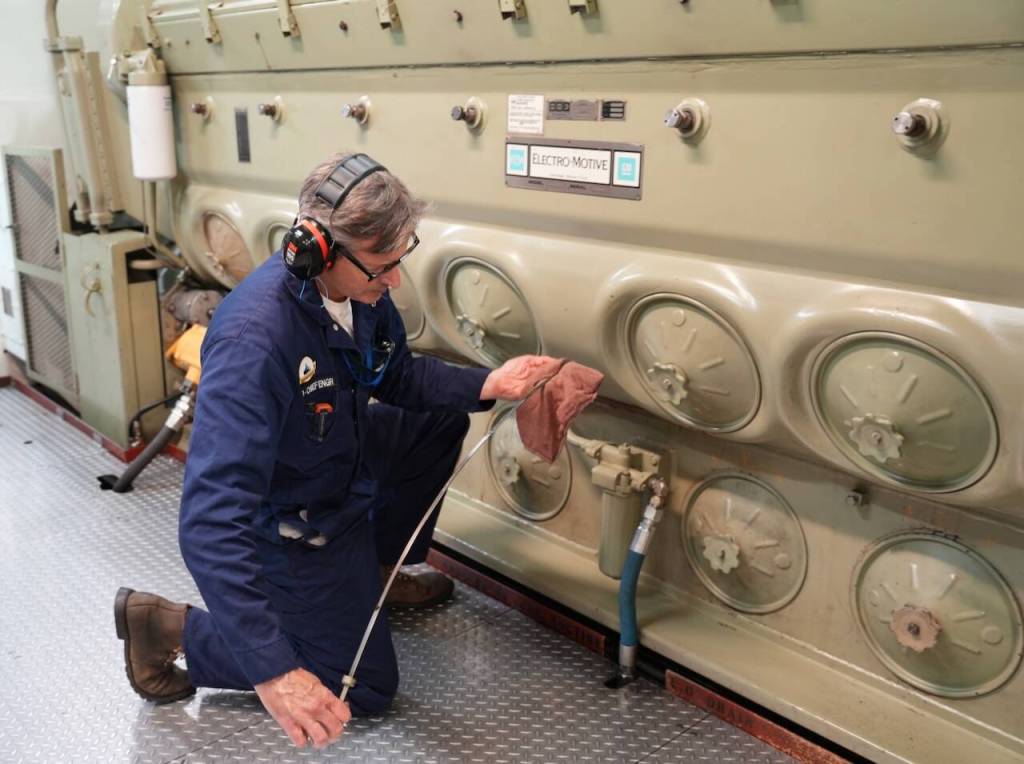

On June 17, the Marine Engineers Beneficial Association, the union representing roughly 400 Washington State Ferries’ engine room crewmembers, held a press conference at Seattle’s Colman dock to highlight concerns around high overtime rates and roughly 20% pay disparities between deck and engine room employees.
MEBA’s WSF representative Eric Winge described some of the impacts of lower wages on union members.
“The conditions that cause crew shortages and canceled sailings remain unchanged. We will see delays and missed sailings in the summer, and unreliability will continue to be an issue if the wage gap between engineers and our deck counterparts is not closed. Pay is higher in the private sector and even in comparable ferry systems in other regions of the country. Washington state is spending billions of dollars on new ferries, but if they don’t step up with more competitive pay, we won’t have enough licensed crew to operate and repair the new hybrid electric vessels when they come into service,” he said.
A June survey of roughly 85 WSF-represented engine room crew members identified low morale and burnout, with 60% of respondents reporting they are somewhat or very likely to retire or leave WSF for a job elsewhere, and more than 55% reported being unhappy and said things are not good for engine room crew.
WSF determines workforce numbers, including hiring decisions, and Winge said the union hasn’t yet reached out to Gov. Bob Ferguson’s office and is waiting to see how negotiations unfold. Regarding overtime rates, Winge said that in the 2025 calendar year, overtime rates were roughly 109,000 hours, or roughly 260 hours per employee; however, individual overtime rates can vary. Winge said pay disparities have widened between deck and engine room crew members since the 2022-2024 contract. He said relying on overtime is not a sustainable way to run the ferry system, which could result in missed sailings if crewmembers are unavailable.
A state Office of Financial Management spokesperson confirmed the state and MEBA are currently engaged in active bargaining, adding, “We can’t speak to specifics about what’s happening at the bargaining table, including discussion about our positions on whether any wage disparities exist. Multiple ferry unions bargain their own agreements, and wage disparity between agreements often arises from bargaining – especially when there are rulings by an independent arbitrator,” OFM deputy communications coordinator Hayden Mackley said. “We expect the process to wrap up by September, as tentative agreements must be submitted to the OFM director by Oct. 1. The bargaining is for terms and conditions to be in place for the period July 1, 2027, through June 30, 2029. The current agreement runs through June 30, 2027.”
Roland Rexha, MEBA secretary-treasurer representing WSF engine room crewmembers, described a disconnect from what’s happening at OFM and what’s happening in the governor’s office.
“They [OFM] don’t know the bow from the stern in nautical firms; they don’t know how the vessel operates, and they haven’t taken the time to figure out what they need to be able to do to get this fixed, and now we’re giving them that solution, and they’re turning a blind eye to us,” Rexha said.
WSF spokesperson Dana Warr said passengers shouldn’t anticipate any changes to services during contract negotiations. Ferguson’s office didn’t respond to a request for comment on the situation.