
A sign of spring – Great Blue Heron colony back in Port Orchard
Published 1:30 am Friday, April 3, 2026
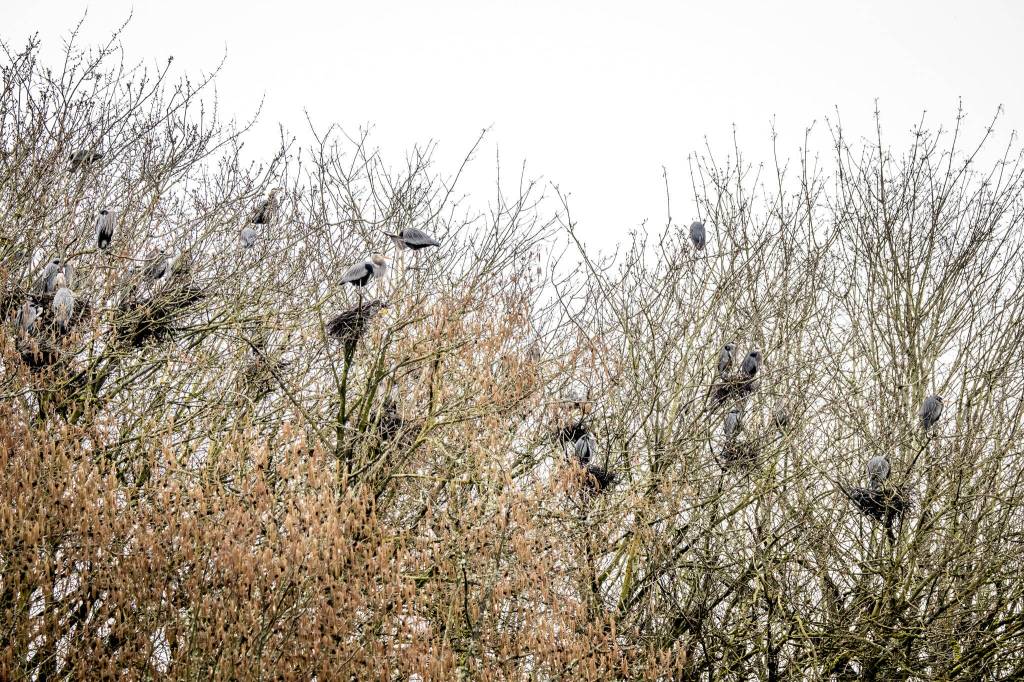
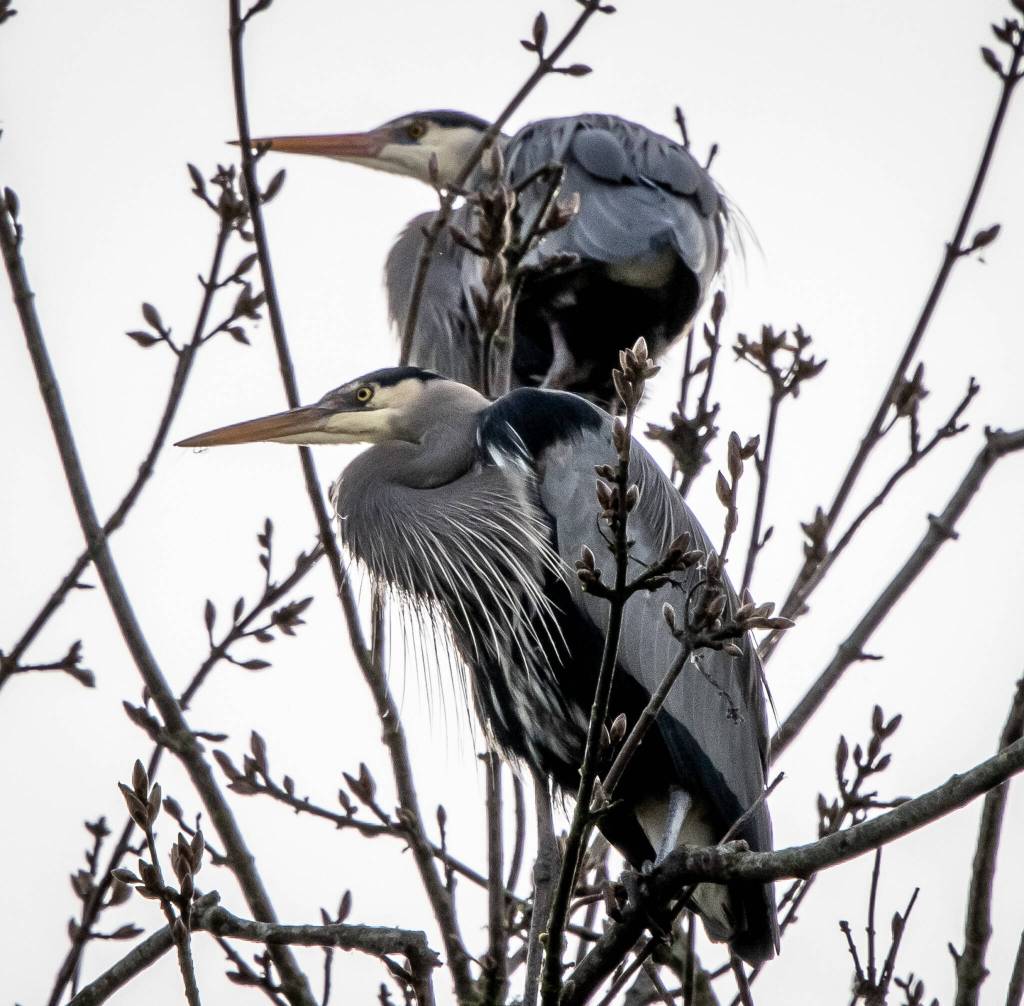

Port Orchard locals know when spring has arrived due to the screechy symphony of the Great Blue Heron nesting colony that has made home in the tree canopy by the 76 gas station at Bethel Avenue and Bay Street. The colony has returned to this spot for decades.
Jennifer Chappell, who was born and raised in Port Orchard, has been keeping an eye on the colony for over 20 years. “I’ve looked forward to seeing them nest here in the spring, building their nests and raising their young,” she said. “Now, it’s something I get to share with my girls; we love watching and learning about them together. It’s a simple tradition that connects us to nature and to this town we’ve always called home.”
The typical Great Blue Heron moves south for winter, returning north to nest in late February or early March, but the subspecies home to the Pacific Northwest is different. The Pacific Great Blue Heron, local to the Puget Sound, is typically non-migratory and remains north in the winter, spending most of their cold months along the shoreline foraging for food. In the spring, they return to the trees for breeding, which lasts until late summer.
These feathered friends are considered a sign of a healthy marine ecosystem, being a top predator that regulates fish and invertebrate populations, preventing imbalances. Being a species high on the food chain, Great Blue Herons are a good indicator of ecological health, the Washington Department of Fish and Wildlife shared. By monitoring their nesting colonies, experts can assess environmental toxin levels, availability and connectivity of shoreline-upland habitat, and conditions of eelgrass and intertidal habitats.
“I think it’s important for everyone to remember, appreciating [the birds] means protecting all of our natural beauty and balance of our town, for all of our future generations to be able to stop, learn, enjoy, and marvel,” said Chappell.
Nesting colonies, also known as rookeries, for the Great Blue Heron vary in size, with up to 500 nests in some areas, but in the Puget Sound, they typically range from 30 to 50 nests. The rookery in Port Orchard has about 75 nests, per WDFW.
WDFW shared that these birds, while considered stable since the 1990s, are reaching a vulnerable state due to habitat loss, pollution, and climate change, but remain the largest colonial nesting bird in the Pacific Northwest.
Allison Anholt, colonial waterbird species lead at WDFW, shared that the heron colonies are also at risk of abandonment due to human disturbance. “It’s important that people watch them from a distance with binoculars or a camera; if they start to fly off or watch you, you’re too close,” she said.
Anholt also shared that the Port Orchard herons should have chicks by May, and as the chicks get older, they will be more visible and start exploring the colony before they fledge in late June and early July.
“I love watching the birds nesting or feeding, they are so majestic and graceful,” shared local photographer Isaak Hammers, who made his way down to the colony the morning of March 15 to take photos of the birds.
Based on observation from previous years, the birds will likely stay in these trees until July or August, before dispersing yet again.


Best of Kitsap