DFW captures invasive European green crab at 2 Hood Canal locations
Published 1:30 am Wednesday, May 28, 2025
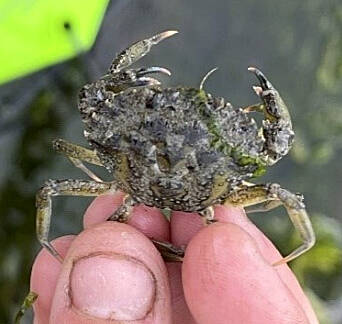
The state Department of Fish and Wildlife recently captured invasive European green crabs at two new North Kitsap locations between northern Hood Canal and Admiralty Inlet during an early detection trapping effort.
WDFW Aquatic Invasive Species Division crews working in collaboration with the Port Gamble S’Klallam Tribe caught two of the green crabs near Port Gamble earlier in May. Another green crab was caught in Races Cove west of Hansville. These detections are the first time the crabs have been found in WDFW’s South Central Puget Sound Management Area for EGC control, per a news release.
“We designed our early detection monitoring to identify European green crabs in areas where they’re most likely to spread next,” said Raquel Crosier, the state’s European green crab emergency incident commander and a WDFW Aquatic Invasive Species management coordinator. “While these new detections are disheartening, finding them early gives us the best chance at suppressing the population and preventing further spread into southern Hood Canal and Puget Sound.”
WDFW, the Port Gamble S’Klallam Tribe, other co-managers, and permitted partners are planning additional collaborative trapping events this summer to assess the number of EGC in the area and to remove as many as possible, the release states.
The European green crab is a globally damaging shore crab species that threatens native shellfish, estuary habitats, eelgrass, aquaculture industry and businesses, and other tribal, cultural, economic, and environmental values. WDFW published a long-term management plan to control this invasive species in September of 2024 following input from dozens of co-managers, tribes, and partners.
More than 1.7 million EGC have been captured and removed from Washington waters since a Governor’s emergency order was declared in early 2022, directing state agencies and partners to prioritize coordinated efforts to control invasive green crabs on the Washington coast and within the state’s portion of the Salish Sea.
WDFW is also coordinating with Canada, Alaska, Oregon, and California on invasive species management efforts throughout the West Coast, as well as requesting additional federal support, the release concludes.


Best of Kitsap