
Residents, schools want swift enforcement of new drug law
Published 1:30 am Wednesday, August 30, 2023
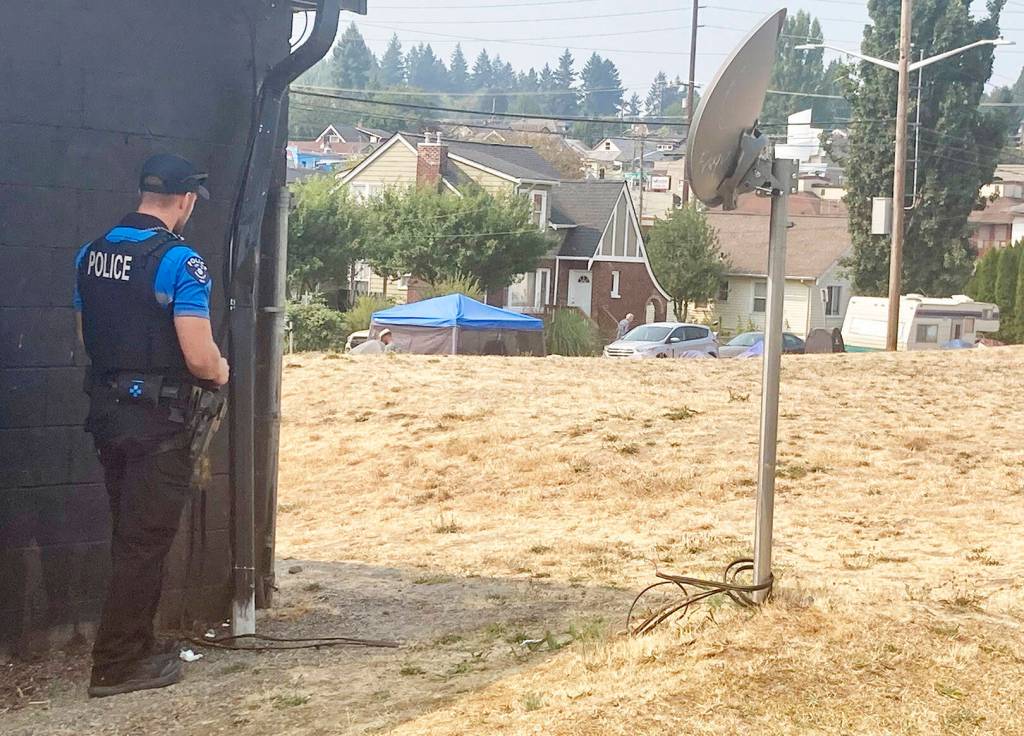



The period of education and outreach is over for Kitsap County law enforcement that, backed by new state law, can again battle the longstanding drug epidemic.
Nowhere has that been more evident than downtown Bremerton, where police have now been seen heavily patrolling the long stretch of homeless encampments along Martin Luther King Jr. Way, a common hub for drug use. Bremerton police can easily be seen nearby, closely watching the drug activity inside the camp.
Sheriff John Gese, who has long advocated for any tool to use in combating the drug epidemic, is thrilled to see a law that allows law enforcement to take action, even if it took an emergency session by state legislation to do it.
“After effectively having no enforcement for the last two years since the Blake decision, and the temporary law that wasn’t effective, having this new law is good,” he said. “Prior to the Blake decision, possession of hard drugs was a felony. The temporary law made the crime a misdemeanor, but was set so strongly towards diversion for the most part precluded arrest and prosecution.”
Drug possession is now a gross misdemeanor as of July 1 and punishable with jail time right from the get-go without immediate referral to treatment. A grace period lasting until Aug. 14 gave both those in encampments and officers a chance to communicate with each other and understand the new standards of enforcement. Gese said that was important to maintain a common goal of seeing those affected by drugs having the chance to get better, even if it comes to spending time in a cell.
“Many we encounter and work with do not want to be addicted and recognize they may be in a situation where they will be contacted and face arrest or diversion, and this may help them into treatment,” he said. “We had a case already where our deputies contacted someone in possession, and they accepted diversion, and we were able to transfer them to services.”
Despite the new law, some worry the crisis will not be dealt with swiftly.
Anna Tetrick has made a habit of counting the number of new tents on her way to and from work every day. Having been the recipient of a number of threats from these folks, she said she fears for her life sometimes. “I definitely think there needs to be more of a routine thing going around and staying around what’s going on,” she said about the new level of police response.
As someone who has experienced homelessness, Tetrick spoke about her willingness to use the resources available and find a better self-sufficient life in the long run. Even so, she knows there are people who don’t want help and use the encampments as a way to fuel their drug addictions.
“The hardest part is watching that back parking lot,” she said, pointing to a lot behind the Burger King off 6th Street that has become its own encampment. “That’s where the drugs come in. I wish that could get straightened out, the whole lot.”
The drug crisis has also become a major concern for school employees as the first day of school nears. Officials from Peace Lutheran Church and School said the property behind their church and daycare has been constantly littered with trash and drug paraphernalia. The school’s principal Doug Eisele, confirmed that the smell of drugs was bad enough that the daycare’s director made the call to keep kids inside.
“It’s not every day, but because it’s not our property, it makes it very hard to police,” Eisele said. “They know when we’re calling too, and they’re usually pretty good at ‘scadoodling.’ Then when the police are gone, they’re back.”
Eisele said some employees have taken it into their own hands to take pictures when they can, which are then forwarded to police. Despite residing close to the crisis, the news was shocking to folks like Tetrick. “It just really hurts my heart,” she said. “Kids don’t need to be subjected to that.”



Best of Kitsap