Rep. Nance breaks another record with run along Mississippi River
Published 1:30 am Tuesday, January 6, 2026

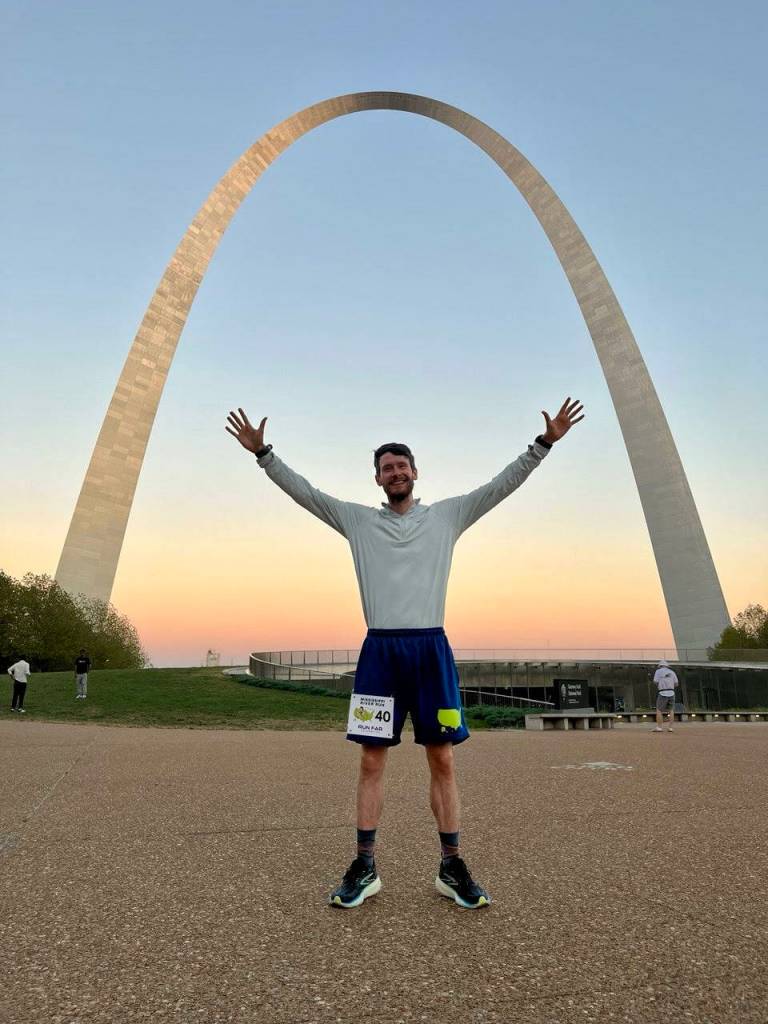


Representative Greg Nance (D-Bainbridge Island) of the 23rd Legislative District broke another world record this fall, once again in the name of youth mental health. What he learned will shape his work in Olympia in the 2026 legislative session.
Nance completed the first-ever source-to-sea run along the Mississippi River from Aug. 20 to Oct. 30, following the Great River Road scenic byway from the headwaters of the river in Lake Itasca, Minnesota, to the Gulf of Mexico in Venice, Louisiana. The run was over 2,000 miles, and Nance took 72 days and about five million steps to complete it.
“The mission of the run was to spark a nationwide movement for youth mental health. Part of that is, hey, we got to go connect with people. And I always want to hear: what are the challenges young people are facing? And then, how are we as a community supporting young people? What’s working here?” Nance said. “We were — virtually every day — meeting someone, whether it’s at a gas station, a hotel, out on the road, at a job site, having beautiful conversations about how we can better (support) young people.”
This is far from Nance’s first record; he holds 58 fastest-known running times, has run 3,156 miles across the contiguous U.S., and ran from the Puget Sound to the summit of Mt Rainier. Once a teen and young adult struggling with substance abuse and depression, “running saved my life,” Nance maintains, and his ongoing efforts to broaden support for youth mental health are his way of sharing the purpose and connection he found in the sport.
“This run was different for a host of reasons, one of them being the emotional connection. I grew up, my summers, down in Natchez, Mississippi, at my grandma’s house. Grandma Ruby was always a big encouragement for my running and my inspiration and my curiosity,” said Nance. “I remember asking her where the water came from, in the river, and her telling me, ‘Up north.’ I just always wanted to go explore it, see it for myself.”
His running philosophy has brought connection to more than just youth. To train for his Mississippi run, he started a bipartisan, bicameral “Running Caucus” in early 2025 for legislative members to meet in a neutral setting and form bonds across the aisle, which he’ll continue into 2026.
The idea is to build trust and camaraderie between legislators from all over the political spectrum, Nance explained, which will be crucial as reduced federal support and a difficult state budget session loom in the forecast. If the people Nance met on his run are any indication, he is confident it’s possible, the legislator said.
Nance recalled meeting a “delightful veteran” in Minnesota, whom he was stuck at a broken crosswalk with for a short while. The men struck up a conversation, and after Nance explained his run’s mission, the veteran shared that he made an effort to show up for young boys and men who plan to enlist to prepare them emotionally for the challenges that come with military service.
“That was beautiful, and that was very resonant with a number of folks I’ve met in Bremerton that are looking out for fellow veterans (…) There are really, really great people and compassionate, caring adults all over the country. Too often, we don’t always see that, because sometimes that’s not the story told — instead, it’s some of the bad news and the rough stuff,” Nance said.
Further south, Nance began to approach familiar stomping grounds. He wore a live running tracker with a public feed, and people would join him to run a stretch. Friends and family in St. Louis, Missouri, and Memphis, Tennessee, surprised him at rest stops with sandwiches and other treats to refuel. In Bellevue, Iowa, two eighth-grade runners joined Nance to share their ideas about the importance of eating well, so that kids feel healthier and have better self-esteem — “they’re going to be kinder to each other when they’re feeling good,” Nance recalled.
“As I think through the work I’m going to be doing, one of the biggest elements is that there are a lot of young people (who) are going hungry all over the country. (I met) kids (who) aren’t having full meals so they can help an elder that needs to be fed. That’s heartbreaking. As a member of the Agriculture and Natural Resources Committee and as a member of the House Transportation Committee, I’ve been tasked with finding efficiencies within these networks and to cut any bureaucracy we can, cut any red tape we can to feed more Washingtonians, especially vulnerable elders and kids. That is a personal mission of mine this legislative session, and it’s even stronger after seeing some of this up close running through the country.”