Kitsap organizations assessing forest health by recording birds
Published 1:30 am Tuesday, December 23, 2025
If you’re out walking in the forested areas of Kitsap County, tread lightly and speak softly — there may be someone listening, but they’re not looking for you.
Four Kitsap-based conservation organizations have embarked on a multi-county project called the “Listen Up Collaborative,” a unique method of assessing forest health by recording birds and other wildlife in areas treated for habitat improvements.
The Great Peninsula Conservancy, the Bainbridge Island Land Trust, the Point No Point Treaty Council and the Kitsap County Parks Department have teamed up with the Jamestown S’Klallam Tribe, the Northwest Natural Resource Group and the Cornell Lab of Ornithology to conduct audio recordings of sensitive habitats all over Western Washington.
By reviewing which bird species are visiting an area, conservationists can infer whether their efforts to restore native plants and establish healthier forests in Western Washington are effective.
Strategies like selective forest thinning, the creation of brush piles and standing snags, and restoration of native plants in areas invaded by non-natives may all have different effects on biodiversity in a given area, which can be difficult to measure, explained Mac Davenport, communications coordinator at BILT.
But birds can tell scientists about what plants, insects and predators may be in an area, just by their presence — and conveniently, they’re chatty.
“We have the same habitat challenges on Bainbridge Island as those our partners face on the Kitsap Peninsula — stressed forests with too many similar trees packed together, letting no light through for a healthy understory, and disturbed openings covered in weeds,” said Gina King, conservation director at BILT, in a press release. “[This project] enables us to test the impacts of shared management strategies for the benefit of collaborators as well as for small forest landowners throughout the region.”
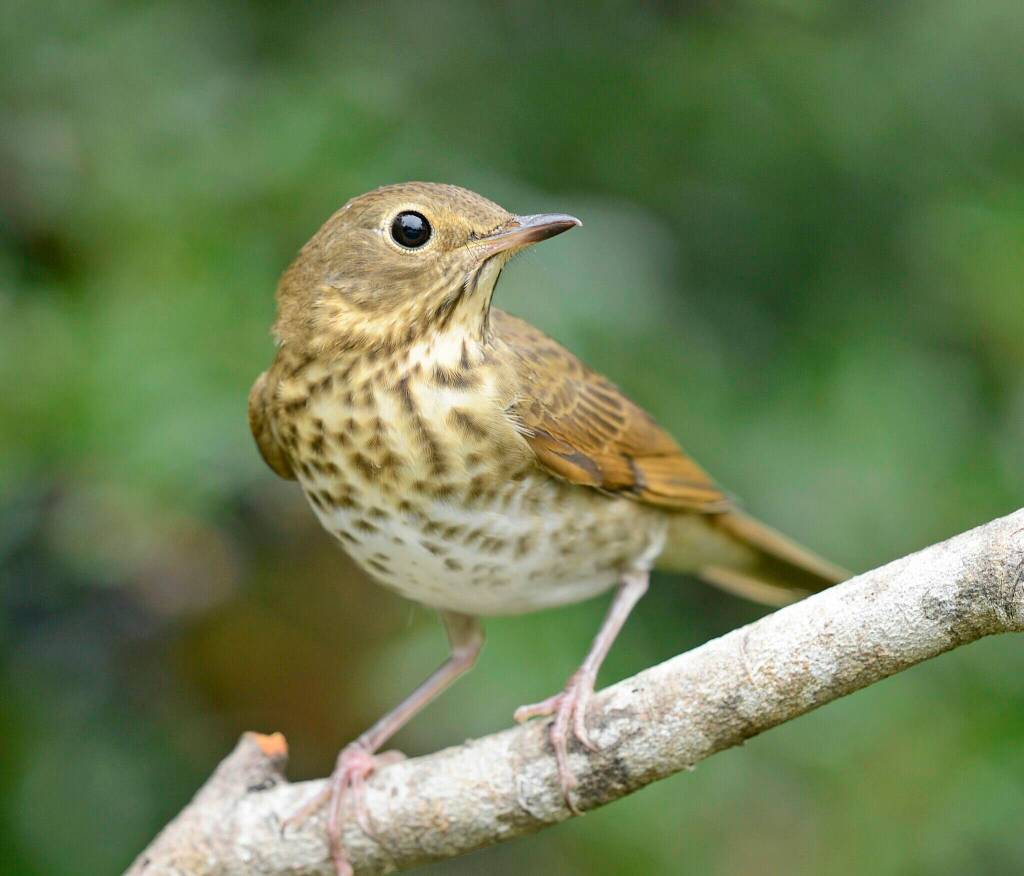
Right now, the project is listening for 58 bird species, including seven “Species of Greatest Conservation Need” and 13 “Species of Continental Concern,” per the Cornell Lab of Ornithology. Some species may already be familiar to Kitsap backyards: brown creepers, chestnut-backed chickadees, Pacific wrens, pileated woodpeckers, spotted towhees, Swainson’s thrushes, western flycatchers, Wilson’s warblers and red-breasted nuthatches are all focal points on the project’s list.
“Recent data from the project indicate that Swainson’s Thrush vocalizations increased dramatically in restored forest patches, proving that thoughtful intervention helps birds thrive,” Davenport wrote.
BILT has deployed acoustic devices, called “AudioMoths,” in the Manzanita Ridge and the Quitslund Preserve. Both sites are part of the land trust’s efforts to improve climate resilience, but the organization has plans for the Manzanita Ridge site. The group plans to establish a rare oak and wildflower woodland habitat in the area.