‘This work is personal’ – cycling duo advocates for accessible streets
Published 1:30 am Thursday, February 26, 2026
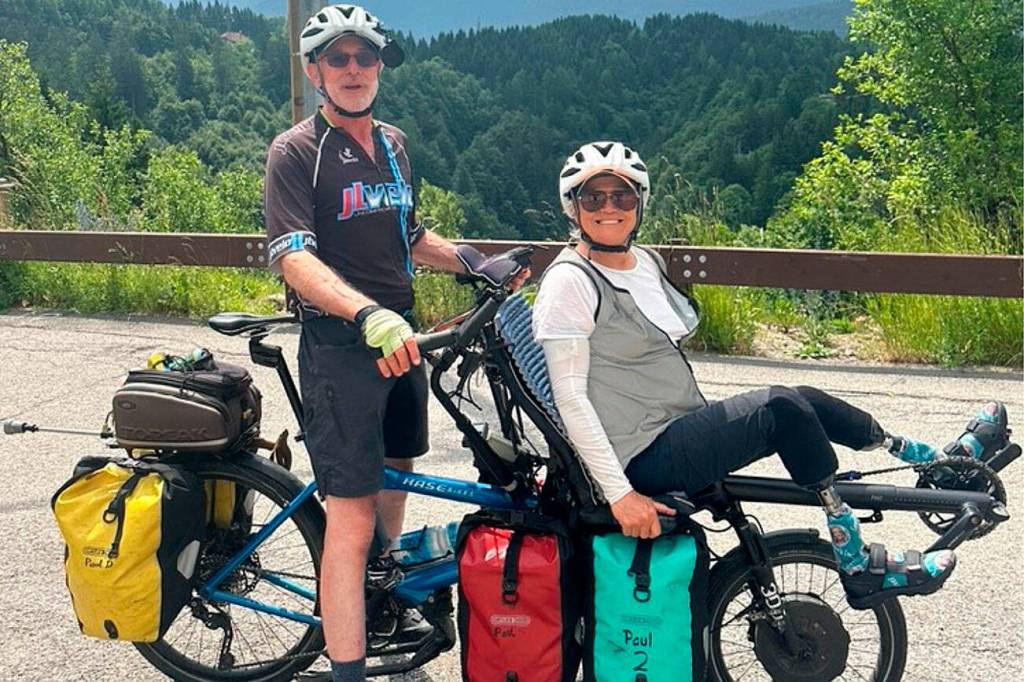
Dianne Iverson of Bremerton is a double amputee, cyclist, and trail advocate. Iverson and her husband, Paul Dutky, have been riding tandem bicycles since 2015, advocating for safe streets in Kitsap County.
The pair met on a ferry ride to Friday Harbor when Iverson was healing from her second below-the-knee amputation. Dutky was on his way to a three-day backpacking trip in the San Juans while Iverson was on one of her first outings in recovery, whale watching with friends.
Six months later, they bought their first tandem bicycle and have been riding ever since.
Iverson spent more than 30 years using a wheelchair as her primary form of transportation. Cycling became a new way for her to experience independence again after amputations at ages 55 and 65. Especially with her tandem bike, Iverson is able to travel miles she could not walk. “Those miles only work if the routes are safe and accessible,” she said. “Living with a disability has made me very aware of how many of our streets, parks, and public spaces unintentionally exclude people. A truly accessible trail or sidewalk isn’t just a nice amenity; it is freedom. It means kids, seniors, and people with disabilities can participate fully in their communities.”
Traveling and cycling abroad has changed how Iverson and Dutky view trail and street safety. A trip to the Netherlands especially changed how the cyclists think about what is possible locally in Kitsap. “We saw children riding home from school, older adults using mobility scooters, people in wheelchairs, families hauling groceries, all traveling safely on the same connected network. It wasn’t recreation. It was everyday life. That’s what we want for Kitsap County,” said Iverson.
“Cycling has become how we explore the world and how we connect with our community,” Iverson went on to say. “We’ve ridden across much of the United States, from national parks like Arches (Utah) to cities like New York, and throughout Europe. Our first overseas trip was a bike-and-barge tour from Paris to Bruges. Since then, we’ve cycled in France, Belgium, Italy, Austria, the Netherlands, the Czech Republic, Hungary, Slovakia, and Slovenia.”
Locally, the cyclists are focused on advocating for safe transportation. Dutky chairs the West Sound Cycling Club’s advocacy committee and Iverson serves on the Leafline Trails Coalition and the North Kitsap Trails Association boards. Together, they work to expand safe places to walk and bike. “One major priority of ours is filling the gaps in the four-county Leafline Trails Coalition paved trails network,” said Iverson. “While neighboring counties within (Puget Sound Regional Council) have over 500 miles of paved shared-use paths, we have less than five miles. We’re hopeful that with the existing elected officials that Kitsap County and its cities currently have, that safe infrastructure for people walking, biking, and using wheelchairs will become a priority not just in plans, but actually constructed.”
Iverson and Dutky have advocated for the planning of the Sound to Olympics trail that will run from the Bainbridge Island ferry terminal to Port Gamble. Iverson and Dutky shared that this is helpful to North Kitsap, but there is still a need to be filled in South Kitsap. “In Central and South Kitsap County, we need a safe place to walk, bike and roll for our residents. We need a safe connection between Port Orchard, Gorst, and Bremerton. We currently don’t have one. If you’ve tried to walk or bike from Bremerton to Gorst, you know how dangerous it currently is,” said Iverson.
Currently, Iverson and Dutky are advocating for a trail that runs 3.1 miles from Jarstad Park in Bremerton to Kitsap Lake. This route has been studied, analyzed, and deemed feasible since 2017.
“With broad backing from elected leaders, emergency planners, and residents alike, the path forward is clear. What we need now is action,” said Iverson. “This trail isn’t just recreation, it’s emergency access, safe transportation, and everyday mobility for families. Nine years after the feasibility study, Central and South Kitsap residents deserve the same safe places to walk and bike that other parts of the county are fighting for. For us, this work is personal.”