Gorst traffic solutions include bridge options over Sinclair Inlet
Published 1:30 am Thursday, July 23, 2026
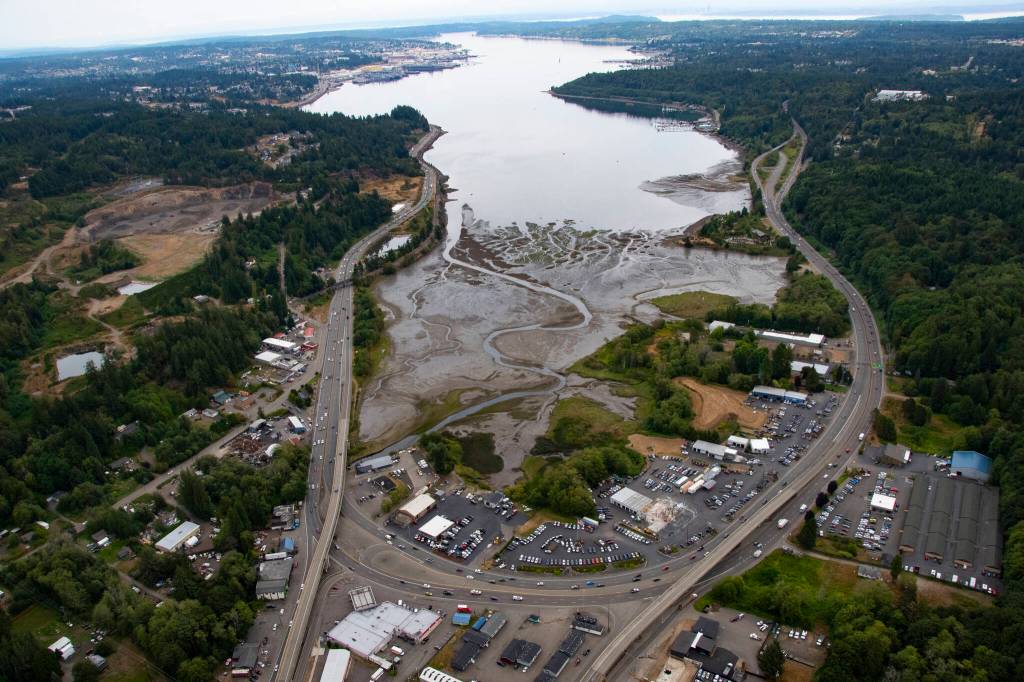
Anyone who has spent time crawling through traffic in Gorst during rush hour knows the frustration.
The Washington State Department of Transportation is now studying several long-term options that could reduce congestion through one of Kitsap County’s busiest highways.
WSDOT, in partnership with the Federal Highway Administration, is conducting a Planning and Environmental Linkages (PEL) study to explore ways to improve traffic along Highways 3, 16, 166 and 304 in the Gorst area. The study began in June 2024.
The project is still in its early planning stages, and no construction has been approved. Instead, WSDOT is evaluating possible solutions while gathering feedback from local agencies and the public before moving into the next phase.
“We are looking for ways to reduce that congestion and at the same time improve transportation for all highway users in that area,” WSDOT Olympic Region communications consultant Mark Krulish said.
The Gorst corridor is one of the busiest transportation routes in Kitsap County. It connects North and South Kitsap and serves as a key route for Naval Base Kitsap and other military facilities.
Per WSDOT, traffic is expected to continue getting worse if no improvements are made. In less than 10 years, travel times through Gorst would more than double, the agency says. WSDOT narrowed several concepts to three alternatives it believes best improve mobility and long-term reliability.
“I think the fact that we’ve gotten this far and are going to be able to carry this into the next phase is a huge accomplishment,” Krulish said.
The first, Alternative A, would widen Hwy 3 from two lanes to three lanes between Hwy 304 and Gorst. The project would improve intersections and driveway access while keeping the highway in its current location. It also includes a shared-use path for people walking and biking.
The second option, Alternative B-3, would build a new bridge across Sinclair Inlet with two lanes in each direction. The bridge would allow drivers traveling through the area to bypass much of Gorst, while the existing roadway would continue serving local traffic.
“If you’re driving through Gorst and your destination is farther south, the bridge would allow you to bypass that congestion,” Krulish said.
The third option, Alternative C-2, would also build a new bridge across Sinclair Inlet but with three lanes in each direction. Most regional traffic would use the bridge, while the existing section of Hwy 3 through Gorst would turn into a local access street.
Krulish said the current study is not choosing a preferred alternative. Instead, all three options will move into the National Environmental Policy Act (NEPA) process, where WSDOT will take a much closer look at environmental impacts before any decisions are made.
That review is expected to take another two to three years before the project could move into design. While the legislature has committed $75 million for planning and potential right-of-way acquisition, no construction funding has been secured.
Krulish emphasized that no decisions have been made yet, but he encourages residents to stay involved as the project moves forward.
“People are pretty eager to see congestion issues in Gorst ease, so we’ve gotten pretty good support for that,” Krulish said.
The draft PEL study report is expected in late 2026 and will include a 30-day public comment period before the study is finalized in spring 2027.
Residents can learn more and submit comments by visiting WSDOT’s Hwy 3 Gorst Area study website or emailing SR3GorstArea@wsdot.wa.gov.
Nathan Hyun is a freelance reporter for Kitsap News Group.


Best of Kitsap