WSF seeking feedback on Southworth terminal replacement
Published 1:30 am Tuesday, March 17, 2026
Washington State Ferries is planning to replace its Southworth terminal and is seeking public feedback for four alternatives through an online open house that runs through April 5.
WSF and the Washington State Department of Transportation are currently assessing the alternatives for the new terminal. Each possible location is being evaluated based on a variety of factors, including how it would affect passengers, terminal operations, and the environment, a news release states. Currently, WSF is in a pre-design study phase to assess these alternatives and get public input through the open house (engage.wsdot.wa.gov/southworth-project/surveys/southworth-terminal-pre-design-study-feedback)
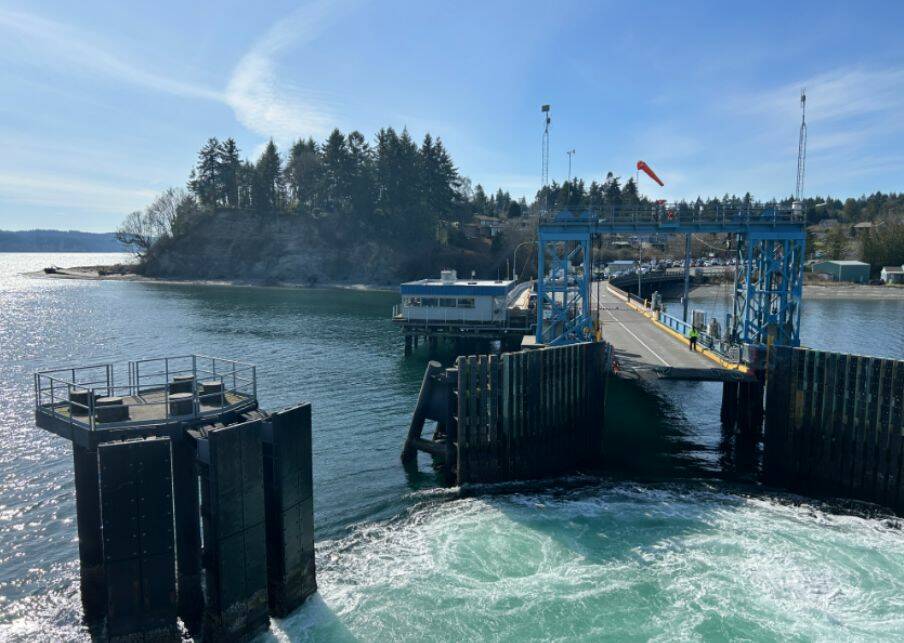
The current terminal is over 60 years old and services around 825,000 passengers a year. The location is known as a hub for Kitsap Transit’s fast ferries, which bring foot traffic to downtown Seattle. WSF is replacing the terminal building and timber trestle, which are aging and at risk of collapse in the event of an earthquake, per the release.
The project will improve operations on the Triangle route by preserving and upgrading the Southworth terminal, consistent with WSF’s 2040 Long Range Plan. The plan recommends short, medium, and long-term actions that focus on investments and service enhancements to be implemented over 20 years.
The updated Southworth terminal will occur in two phases, first replacing the terminal, and second, replacing the dock to meet current seismic, safety, and operational needs. Phase one began in mid 2025, and the new terminal building is set to be completed by 2028. Phase two is expected to begin between 2027 and 2029, with construction of the dock slated to end in 2031.
Alternative one is a “No Build” option that keeps the terminal in place with no changes. This would result in no impact or construction costs, but would keep the earthquake vulnerability for the terminal high. There would, however, be high maintenance costs due to the aging building, WSF shared. The “No Build” alternative is required under the National Environmental Policy Act (NEPA) and serves as a baseline for comparison with the other alternatives, per the release.
Alternative two is to remodel the current terminal building, located at the end of the dock at Southworth. There would be new piles installed as well to support the structure. During construction, passengers would be unable to use the terminal. Under this alternative, WSF would build a new administrative office building in a separate location.
Alternative three would build a new, modern terminal located near the shoreline. The new terminal building would also include space for WSF’s administrative offices. The construction cost would be similar to that of alternative two, but with lower maintenance costs as the building would take longer to age, per WSDOT.
Alternative four would build a new, modern terminal at the current building’s location, closing the building to passengers during construction. Impact and construction costs would be high, but maintenance costs would be lower due to a completely new structure.
With all four alternatives, there is no expected change to ferry services, WSDOT shared.
WSF is evaluating the alternatives with technical experts and agency partners using various factors, including safety resilience, impacts to terminal operations, passenger experience and accessibility, and costs to build and maintain.
Potential environmental impacts are also under WSF’s scope, including removal of creosote-treated timber piles that are currently supporting the Southworth Terminal, shoreline marine habitats near the dock, wetlands near the site, energy efficiency of the terminal building, stormwater management, and the potential presence of cultural resources.
WSF will finalize the pre-design study by identifying one operationally efficient and seismically resilient option to carry forward into design and environmental review, WSF shared. WSF expects to complete the pre-design study this spring. Once it is complete, the design and environmental review phase will begin.
Funding for the project is currently TBD, as it’s still in the pre-construction phase.