Century of service to community, heritage | Sons of Norway 100th
Published 1:19 pm Friday, June 19, 2015
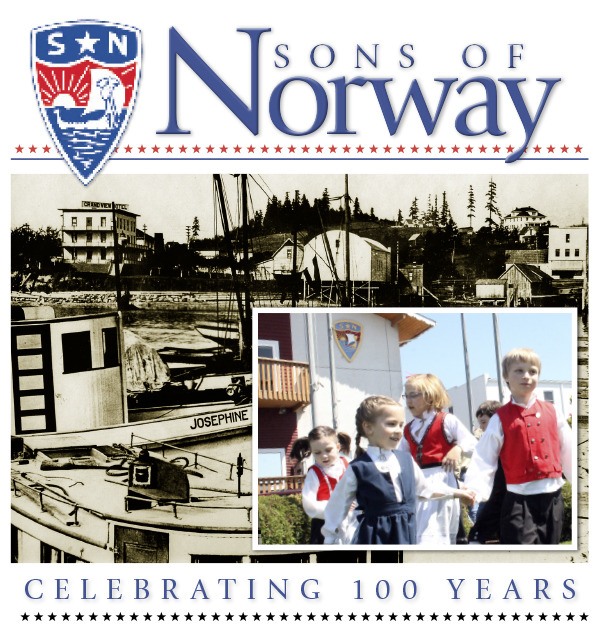
The Sons of Norway was organized as a fraternal benefit society by 18 Norwegian immigrants in Minneapolis, Minnesota, on Jan. 16, 1895. Poulsbo Lodge No. 44 was founded on Feb. 22, 1916.
Back in the day, chances were good you worked either as a fisherman or a logger, a job that put you at high risk of being injured or worse. The Sons of Norway was founded to offer financial tools — insurance and annuities — to help protect members and their families from financial hardship during times of injury, sickness or death.
The lodge was an early part of the community’s safety net. It was also a community gathering place, where people with Norwegian roots could keep ties to their heritage and culture fresh even as they melded into the American fabric.
“The Sons of Norway historically was one of two local institutions that you had to belong to,” said Phil Swenson, a longtime member. “You were either involved in the Sons of Norway or in the Lutheran Church, or you were nobody,” he quipped.
Over time, the lodge’s mission expanded into the social and educational. (It still offers insurance and financial services. According to the parent lodge’s website, the Sons of Norway has 55,347 members in 380 lodges in North America and Norway, with nearly $714 million worth of life insurance in force.) The forebears of today’s members hail from many cultures, but all are drawn to the lodge by common purpose: an interest in Scandinavian culture and its role in local history, and a desire to participate in endeavors that make a positive impact in the community.
As one member said, the Sons of Norway is not just for Norwegians anymore.
Julie Swenson, Phil’s wife, is of Lebanese ancestry. She met her husband at a Norwegian folk dance.
She got involved in the Sons of Norway before she met her Norwegian-American husband because “I love the culture.”
Founding of Poulsbo lodgeIn 1916, Poulsbo’s population was between 364 (1910 Census) and 546 (1920 Census). It had been 33 years since the wave of Norwegian immigration to the area had begun (most of the original residents, the Suquamish people, had relocated to the Port Madison Indian Reservation) and the predominant language spoken here was Norwegian.
Most breadwinners farmed, fished or logged. Martha & Mary had opened a home to care for children whose families had hit a rough patch because of injury, sickness or death of an income earner.
On Feb. 22 of that year, 23 Poulsbo men gathered in the Modern Woodmen Hall — on Iverson Street just west of Gateway Christian School, near the foot of the cemetery — to organize a Sons of Norway lodge. The Norwegian consul, Thomas H. Kolderup, came over from Seattle to assist.
“Poulsbo” was chosen as the new lodge’s name from a list that included Vinland and Breidablik, names of small communities near Poulsbo. They reflected the broad area from which the new lodge’s membership was drawn. Leif Erikson Lodge No. 1 in Seattle served as the sponsor.
On March 8, 1918, the Kitsap County Herald reported: “At a late meeting of the Sons of Norway it was decided to buy the [Poulsbo Athletic Club] hall and fix it up so it can be used for large gatherings, for shows and the Lodge. The hall is a good building with the exception that it is not warm enough for winter time. Rooms and galleries will probably be added to it as an improvement.”
The Poulsbo Athletic Club building was built in 1908. “[It] is now the large faux-log front red building next to Longship Marine,” historian Judy Driscoll writes. “It appears in the oldest photos of the waterfront as the rounded top building (that was a false front).” The building now houses the Poulsbo Antique Mall.
On June 28, 1918, the Herald reported that the lodge changed the name of its new home to Grieg Hall, “in honor of the great Norwegian composer.”The lodge occupied the former athletic club building until 1973, when it moved into its current lodge, built at the site of the Grand View Hotel.
Today, the lodge is, as it always has been, a community gathering place. The Marine Room has a seating capacity of 465 and overlooks Liberty Bay. The Viking Room has a seating capacity of 129 and also overlooks Liberty Bay. The Norse Room has a seating capacity of 61; all three are leased for community and special events and service club meetings.
The lodge’s Ladies Club offers full-service catering, including food preparation, serving staff, linens, place settings, and dishes.
Amenities available to members and guests include a lending library; and the Troll’s Den, a bar featuring a large collection of trolls.
The lodge is appointed with artifacts, historical images and traditional art, all of which help tell the story of the Scandinavian experience in North Kitsap.