Hitting the road with Poulsbo PD
Published 3:50 pm Tuesday, November 4, 2008
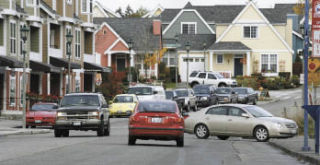
POULSBO — Proposed traffic changes to the city of Poulsbo’s downtown core have had business owners choosing sides. Some believe a traffic flow is important to pull in customers, others call for increased pedestrian safety and a de-clogging of the thoroughfares.
So the Herald set out to discover just how a dozen more four-way stops and a handful of speed tables recommended by a consultant study to the city could affect users of the roads in Little Norway’s center — and those who enforce the rules.
Coming to a complete stop
Poulsbo Police Officer Nick Hoke nabbed three stop sign violators downtown Monday morning, each at a different intersection. At Torval Canyon Road and First Avenue, Jensen Way and Sunset Street and Jensen and Iverson Road, cars were caught jetting through four-way stops without fully coming to a halt.
Hoke ticketed none, but gave a verbal warning to be careful to each.
“If I feel like I can make a good impression on somebody without writing a ticket then that’s my preference,” he said. “An alarming number of drivers are not aware they’re not stopping.”
When Hoke first started on the job 15 years ago, traffic tickets were just $37. Now they ring in at $124, “which can be really painful,” he said.
So far in 2008, 3,616 traffic stops were made by Poulsbo Police officers; 1,158 citations were written, according to the department’s records. Ticketing, Hoke said, is at an officer’s discretion.
He added he doesn’t see many chronic traffic problems downtown, other than large amounts of cars coming through at times. In 15 years on the job, he’s never been to a pedestrian vs. car injury scene.
He said it is likely drivers are used to using a downtown route after more than two years of construction on the highway.
“I think it’s almost become the new norm since that construction project started shifting the cars over,” he said. “I’m sure that there’s been a lot of people that got used to not using the highway.”
But not all downtown traffic consists of cut-through motorists; the Poulsbo post office, Hoke said, sees 3,000 vehicle visitors a day.
Hoke said Poulsbo police usually run 2-3 patrol cars per shift. Currently the department is down two officers, and between municipal efforts to save money on hiring and a lack of worthy applicants, Hoke said adding to the force has lately been a tricky task.
He wondered if the increased stop sign intersections would either infuse more good behavior into drivers, or cause the need for extra enforcement that could spread department resources thin. It’s a question he doesn’t yet have an answer to.
A bumpy ride
While patrolling downtown, a potential medical emergency call came over Hoke’s radio. Heading up the Sunset Street extension at an accelerated rate, it was twice he had to slow to drive over speed tables already placed there.
It’s even worse, he said, for fire engines.
Poulsbo Fire Department chief Dan Olson said the apparatuses can add 5-10 seconds to an emergency vehicle’s response time.
“Everything that we do deals in seconds. Our point of view is to remove or reduce those seconds in the most cost-efficient manner as possible,” he said.
But in the case of what the study is proposing, Olson doesn’t see the speed tables causing a time dilemma.
“In that downtown area where all of this is proposed, it is such a pedestrian-rich area that we have to go slow anyway,” he explained. “Our opinion is we’d be favorable toward it and we don’t see it affecting our responses significantly because of its location.”
Dave Karfsky, general manager of Liberty Bay Auto, said the added stop signs and speed tables shouldn’t have a large effect on automotive wear and tear, especially if speed tables are heeded correctly. Occasionally his repair shop sees customers needing fixes after bottoming out on the raised tables.
“Is there going to be increased brakewear, increased maintenance issues? Probably not,” he said. In fact, in regards to stop signs, he posited the intersection lights on State Route 305 have more potential to create wear and tear since cars must quickly come to a stop from an accelerated rate.
Back in downtown, at 15 miles per hour, driving is already slow enough that a few extra stops or seconds spent idling shouldn’t have a huge effect on car quality.
“If they’ve got to stop an extra two times, I don’t think there’s going to be a noticed drop in fuel economy,” he said. And when it comes to emissions, if the city’s plan to keep commuters out of downtown works, Karfsky said it should lead to fewer unwanted exhaust fumes plaguing the area.
While he didn’t note many problems for drivers and their cars, Karfsky did add a pull for the businesses of downtown: “Frankly, to have people driving downtown and past our store is a good thing.”
Andrzej Kasiniak, city engineer, said the potential changes should next be on the council’s agenda within a month.
To view the traffic study, visit www.cityofpoulsbo.com and click the “Traffic Demand Management Study” tab.