When wildlife comes knocking: bears at our back doors
Published 10:00 am Monday, October 30, 2006
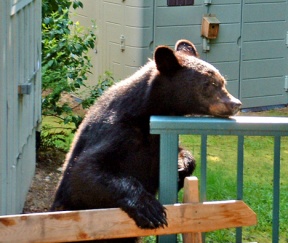
Bears, bears, they’re everywhere in the North End. With hundreds of acres of forest getting clearcut year after year to make room for development, wildlife gets flushed into residential areas. Encounters have increased to the point that some residents are concerned, while others take it in stride.
“The wildlife situation here is getting critical,†said Norm Lockwood, who resides off 272nd Street in Kingston. “They’re getting desperate.â€
Bears especially, Lockwood said, are getting crowded out by development. Lockwood has lived in the area for 15 years and in years past, he’s seen bears that see him or his car and “run like the dickens.â€
“This year, it’s completely different.â€
Lockwood was out planting tomatoes last spring when a young bear came into his yard and went around the house to check out some bird feeders. It stayed for almost an hour and at one point went on the front porch and looked in the front door. Concerned about young children in the neighborhood, Lockwood went outside with his pistol and shot it into the ground, trying to scare off the bear with no intention of shooting it.
“But he didn’t care,†Lockwood said.
The bear looked in the picture window, as if sniffing out food inside. Once the bear stood up with its paws on the sliding-glass window. The next day, another bear came around. This went on for a week, Lockwood said. “They would come whenever they were hungry, and they were hungry. They were skinny and they were lean and had no fear of human beings whatsoever.â€
The first bear, the younger one, was about 150 pounds, Lockwood estimated. The second bear was about 250 pounds but very gaunt.
About a month ago, Lockwood discovered nose prints of a bear that came around during the night.
“The bears are getting very, very pushy,†Lockwood said. “It’s a concern. My experience happens to be very, very common.â€
Stan and Lois Barber, who also live off 272nd, had an encounter with the same bears last May. They, too, said a younger bear seemed overly curious and came up on the porch to raid the bird and squirrel feeders. The berries were late coming in last spring, Lois said, and the bears were hungry. As with Lockwood, the bear put its paws up on the picture window and took a look inside. Stan shooed it away by knocking together pots and pans.
“The bear,†Lois said, “just turned around and looked at him as if to say, ‘OK, can you do that tune again?’ â€
The Barbers were also worried about young neighbors and called Fish and Wildlife to help.
Fish and Wildlife officers brought a trap to their house and baited it. One of the bears went in the trap. The neighbors, who had been watching the scene unfold, couldn’t resist getting a closer look and came over to take a photo of the trapped bear – but the bear hadn’t set off the trap yet, got startled by the neighbors and bolted out to escape into the woods.
The next morning, a Fish and Wildlife officer re-baited the trap, Lois said, bringing along a dozen maple bars. The ranger put nine pastries in a netted bag to trigger the trap. He crumbled the other two inside and down the ramp. The officer ate the twelfth donut, Lois said with a laugh.
The maple bars did the trick and the bear was caught and hauled away to Mason County for relocation. The Barbers said they don’t mind the wildlife visiting once in awhile. “We chose the area for the trees and greenery. We don’t want to get rid of the wilderness. That’s why we live here.â€
Moira Prendergast, who lives off Seatter and Klabo roads in Kingston, was outside last spring and heard chortling which at first she thought was a loud bird, maybe a heron. Then she realized it was one of her llamas sounding an alarm cry. “The llama was throwing his voice – it was going out all over the place.â€
Prendergast looked around the yard and saw a big bear in the corner, about 50 feet away, climbing over a log. She gathered the dogs and went back in the house. Meanwhile, the llamas were running and jumping around then gathered in the barn, peeking out.
The bear took no notice of the llamas. “I would have thought it would be interested in the sound the llamas were making but it was really intent on digging in the log,†Prendergast said.
She doesn’t worry that her llamas will fall prey to the bears. “I don’t see them so much as a threat to the animals,†Prendergast observed. “Their senses are so in tune in different ways.â€
She did hear of a bear going to the Indianola preschool one night and cleaning some dwarf apple trees of all their fruit, leaving behind only big piles of scat.
Jim Thompson who lives off Leyman Lane in Kingston said the bears have been coming by this fall, cleaning the apples off his trees too, and he’s happy to see them still around. He said a three-legged bear came through his property recently.
Bear stories have probably been circulating around these parts for as long as anybody can remember. Most residents are glad there are still stories to tell, and that the great loss of habitat in the North End hasn’t sent all the wildlife over to the Olympic Peninsula.
The fray of habitat fragmentation
As development in Kitsap County has increased, so has wildlife displacement. Habitat loss due to development and other land uses is the largest threat to wildlife populations, according to biologists. Bears aren’t the only ones feeling the squeeze. Foxes, birds, deer, cougars, bobcats, raccoons and coyotes are all adapting to the loss.
“The real issue is habitat fragmentation,†said Jeff Davis, Fish and Wildlife assistant regional habitat program manager for eight counties including Kitsap.
“The increase of subdivisions is having a tremendous effect, displacing a lot of these wildlife species, some of which can learn to adapt to urban environments,†he said.
Based on complaints to Fish and Wildlife, there is a substantial population of bears in the area, estimated to be nearly 600, figuring 1.5 bears per square mile. Kitsap County has an area of 393 square miles.
Sgt. Ted Jackson, Fish and Wildlife enforcement officer, said they have taken 14 problem bears this year that were either re-located or put down.
“There’s no magical bear spot to relocate these,†Jackson said. “We can’t keep dumping bears on Forest Service land – there’s no spot for them. The national parks are screaming that they don’t have room either.†The decrease in bear hunting has allowed populations to increase at the same time that human populations have grown in Kitsap.
“With more people, you’re going to have more human contacts,†Jackson said, including more bears getting hit by cars. He’s also seen an increase in cougar encounters in the North End.
Fish and Wildlife biologist Greg Schirato has seen bear populations remain relatively stable the last two decades. This is largely due to forested areas that were cut down 20 years ago growing back with an abundance of shrubs and berries, which provide an excellent food source that mature forests don’t.
Bear populations declined in past decades due to hunting, mostly by property owners on their own property. Logging companies routinely hunted bears with dogs to control damage the bears did to trees, Schirato said. Bears will peel bark back and feed on the cambium layer, which eventually kills the trees.
Bear populations have rebounded since then and can best be controlled by recreational hunting, Davis said.
The North End has the last, best remaining functional habitat in the county. While the Department of Fish and Wildlife doesn’t have any legal authority over land use, he said, it writes state environmental policy and helps the county with local habitat assessment areas to make reasonable decisions through the Growth Management Act.
The key is getting to large landowners and encouraging them to connect large blocks of viable habitat corridors to prevent bottlenecks, Davis said. When wildlife gets bottlenecked, it can cause problems with diversity and disease control.
“They (developers) want to know the best way to develop and still maintain habitat,†Davis said. “It preserves the aesthetic value of their development and has the potential to sell the property faster.â€
Budget cuts in the department have also led to low staffing levels, Davis said, which means that instead of having the time to provide technical assistance to individuals wanting to protect habitat, biologists have had to focus on regulatory overseeing and permitting.
“We’re reactionary now. Had we taken steps 20 years ago, we might be a lot better off. In Kitsap County, there’s hope. Kitsap is on the front line for urbanizing development.â€
Ursus americanus among us
There are an estimated 25,000 black bears in Washington, nearly 600 in Kitsap County. Mature bears range in size from 5-6 feet long and 2-3 feet tall at the shoulder. Adult males, or boars, average 225 pounds; adult females, or sows, average 130 pounds; yearlings are typically 60 to 75 pounds. Breeding season runs from about mid-June through mid-July in Washington and cubs are born in January or February. Sows usually give birth to two cubs every other year and will care for them for about 15 months before sending them off to fend for themselves. Bears may live 20 years or more and have a relatively large home range of up to 20 miles. Female bears will share portions of their territory but males will not.
In fall, the bears’ attention turns to salmon streams, feeding in early mornings and late evenings. When bears are eating salmon, they may be so focused on their feast that they don’t notice much else, according to Jim Trainer, Kitsap County Community Forester and wildlife aficionado who gives wildlife tours throughout the state. Black bears are primarily crepuscular (active at dawn and dusk) and solitary animals, except for sows with cubs. They may den from mid-October into April in hollow logs and beneath roots of downed trees but are not true hibernators and may remain active in our mild winter climate. By March, they come out to stretch a bit, dig under logs and feed on skunk cabbage and salmon berries. When the blackberries ripen, bears turn into opportunistic eating machines. Signs that bears have been feeding on berries are juice drops on the leaves and big piles of scat. “The bigger the pile, the bigger the bear,†according to Trainer. Although black bears are omnivores and will eat insects and small animals, over 80 percent of their diet consists of grasses, berries, nuts, tubers and wood fiber.
“It’s a misconception that they’re aggressive – they’re not aggressive,†Trainer said. “Downwind, a bear will smell like a wet dog in the forest.†If they do see you they may make guttural challenge noises then will most likely continue on their way. Trainer said he remembers when a 650-pound male bear was taken by a bow hunter in South Kitsap 20 years ago. Female bears, or sows, have been recorded at over 500 pounds.
(Source: Some of the information here was provided by the Washington Department of Fish and Wildlife.)
Keeping wildlife wild
The easiest way to deter wildlife from becoming regular houseguests is to keep pet and livestock food inside, stop feeding birds and squirrels and secure compost and garbage can lids. Black bears don’t tend to be aggressive, just opportunistic. But because of their size and speed there is some potential for danger.
Clean barbecue grills immediately after use and keep fish and meat waste in the freezer until it can be disposed of. Beehives and fruit trees are also potential feeding zones for bears so keep them behind chainlink or electric fencing. Dousing problem areas such as a back porch with vinegar or cayenne pepper is known to be a deterrent. Trimming tree branches to eliminate access to roofs is helpful.
If wildlife becomes a problem, mostly likely it will need to be trapped and removed. See “Who to call†below.
Chance encounters
When out in the woods, hike with a partner or group and make enough noise to prevent surprising wildlife that may be up ahead. Keep small children close, in plain sight out in front. Look for wildlife tracks, scratch piles near downed trees and partially covered scat.
If you see a bear and it doesn’t see you, quickly and quietly back away from the area, giving the bear plenty of room to escape. The bears will tend to avoid you but with their poor eyesight, they may get a whiff first and mistake you for prey. Identify yourself as a human by standing up tall, waving your arms, talking and shouting but avoid direct eye contact.
Bears can move as fast as 30 mph so running away from them isn’t a good idea and can increase the chances that you’ll be chased. Remember that bears can climb trees too so climbing one to escape isn’t a safe option.
In the unlikely event a black bear attacks, fight back aggressively with your hands or any object within reach. If the attack continues, curl into a ball or lie face down on the ground, and play dead. Don’t look up or move until you’re sure the bear is gone.
Who to call
To report bears or other wildlife in a life-threatening situation, call 911. To report problem wildlife or poaching, contact the Kitsap County Sheriff’s office in Kingston at (360) 297-3575 or Washington State Patrol at (360) 478-4646, who will call in enforcement officers from the Washington Department of Fish and Wildlife. Contact Fish and Wildlife at (360) 249-6522 for more information.
To learn more about bears, contact the Fish and Wildlife management program at (360) 902-2515, wildthing@dfw.wa.gov.
Wildest wildlife encounters
The Kingston Community News would love to hear stories (and see photos if you have some) about your wildest wildlife encounters, starting here in Kitsap County. But if you have a doozy from somewhere else in the state, we’d like to hear about that too. We’ll compile these and print them in a future issue. Submit your stories to Editor Rebecca Pirtle at editorial@kingstoncommunitynews.com or Kingston Community News, P.O. Box 1504, Kingston, WA, 98346. Please include contact information so we can get in touch with you.