
Kitsap officials discuss federal immigration enforcement concerns
Published 1:30 am Thursday, April 23, 2026
Washington Gov. Bob Ferguson signed two bills into law March 19, which aim to address safety concerns involving impersonating a police officer and law enforcement officials wearing masks.
“If you’re not a law enforcement officer, it needs to be illegal to wear something that gives the impression that you are. HB2165 keeps people safe by making it a gross misdemeanor to wear law enforcement insignia or have it on your vehicle. It also expands a definition of a peace officer to cover all federal law enforcement agencies, including ICE (Immigration and Customs Enforcement), which helps ensure that impersonating any federal agent is prohibited under state law,“ Ferguson said.
The governor also signed SB5855, which generally prohibits law enforcement, including federal immigration agents, from wearing masks while conducting official business statewide.
“Law enforcement’s job, of course, is to protect us. Yet, ICE is hiding from public accountability. For the safety of both the public and law enforcement, Washingtonians must know they are interacting with legitimate law enforcement officers,” he said.
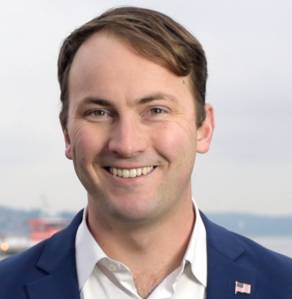
23rd District Rep. Greg Nance shared his concerns about possible immigration enforcement activities in Kitsap County.
“The federal government is intentionally inciting fear among citizens and amongst communities. That’s not the way that our government should be working, and yet we’re seeing that with our own eyes, and so our state government has got to step up to protect people,” he said.
Nance said he supports several bills that aim to address these concerns, including being a sponsor of HB2173, a companion bill to SB5855, which generally prohibits law enforcement from wearing face coverings while conducting their duties, per the state legislature.
“We need to take every reasonable precaution within the law to protect people. And even if ICE said they’re not coming here, they were saying the same thing about Minnesota, and now they’re there. And so I want to make sure we’re providing law enforcement and community leaders and our neighbors with every tool to stay safe.”
Kitsap County Prosecuting Attorney Chad Enright described his role in immigration matters based on the Keep Washington Working Act (2019); local government agencies are generally restricted from providing immigration information to federal authorities.
“What worries me as a prosecutor is that I want anyone who is a victim of a crime or who witnesses a crime to feel safe reporting it. And what I worry about is somebody who is perhaps a victim of domestic violence, who is undocumented, who is being assaulted regularly, and is afraid to call the police because she’s afraid that she’s going to get arrested and detained by ICE. That worries me. I want people to be able to trust local law enforcement. I want them to be able to trust the prosecutor’s office. I want them, when they see a crime, to be able to report it,” he said. “We are not allowed to collect immigration status. We don’t store immigration status if the federal government asks us for that information.”
Enright described some of the safety concerns of federal immigration officials not notifying local police about their operations. “I know that they are concerned and they want to know if an operation is happening, because they don’t want to be in a situation where they’re sending their police officers or their sheriff’s deputies into a scene where you could end up with federal agents shooting at local law enforcement,” he said.
Kitsap News Group reached out to each police agency in Kitsap County to learn how they would respond to the possibility of a federal immigration enforcement operation. Port Orchard police chief Matt Brown discussed the role of local law enforcement within the limitations of the Keep Washington Working Act (2019).
“I would certainly like to see the temperature turned down. Our role is to not only reduce crime, but the fear of crime…our local law enforcement is here for our communities. And again, we don’t have a role in immigration, and we want to ensure that our community members and those that visit are not scared to call us when they are victims. We do not act based on a person’s immigration status. We do not report that, it’s just not what we do. That is the role of the federal government, and we want our community to not be afraid to call us when they need us,” he said.
Brown described situations where POPD would respond to incidents and reaffirmed local police don’t have the authority to investigate federal law enforcement agencies adding, “there’s no action that we can take. We do not have authority over the federal government. What we will respond to is issues of public safety, but we cannot interfere with federal operations,” he said. “Certainly, if somebody calls up and says, I don’t know if they’re immigration people, but they look like they’re kidnapping somebody, we would respond to that in case it is a kidnapping, but if it is a federal operation, we are not going to be involved, nor can we be, because we do not have the authority.”
The PO chief said depending on the situation, his officers may ask to identify federal immigration officials who may choose not to provide their credentials and he trusts members of his department to determine the circumstances of an incident adding, ”Every circumstance is going to be different. The assurance to the community is, if you call us, we will come, but we are not interfering nor participating in federal operations,” he said.
Bainbridge Island police officials declined an interview request and didn’t specify how they would respond to an incident involving federal immigration officials beyond referring to the city’s previous statement and policies posted on the agency’s website.
BIPD affirmed a joint Jan. 29 statement about public trust and immigration enforcement from the Washington Association of Sheriffs and Police Chiefs and the Washington Council of Police and Sheriffs.
“BIPD’s policies align with these protections, reinforcing the city’s stance on ensuring Bainbridge Island remains a safe and welcoming place for all. While BIPD does not participate in immigration enforcement, BIPD does not have the authority to interfere with federal investigations. BIPD’s primary focus is on maintaining peace and public safety in the city. BIPD wants islanders to know that emergency services are available to everyone, regardless of immigration status. If you need help, call 911. The city encourages anyone to contact their state representatives to ask questions, express concerns, and share input on federal and state-level immigration-related policies,” a Feb. 10 statement from the City of Bainbridge Island says.
Kitsap County Sheriff’s Office officials declined an interview request and provided the following statement:
“Federal agents have legal authority to enforce the law anywhere in the country, including Kitsap County. Their operations are not coordinated with our agency. The sheriff’s office is not notified before they occur, nor are we informed afterward. It is possible that, like other law enforcement agencies in Washington State, if operations occur, we will learn about them from community members who reach out to us. Many are asking what the Kitsap County Sheriff’s Office can do. First and foremost, we will uphold and abide by the laws of the state of Washington. If you believe you have been a crime victim or witnessed a crime, report it to us, and we will respond. Our deputies will ensure everyone’s safety, and we will document what occurred. However, we have no authority over operations conducted by federal agents. Our deputies will work to reduce tension and de-escalate situations whenever possible.”
Police officials with Poulsbo, Suquamish Tribe, and Port Gamble S’Klallam Tribe declined interview requests, while police officials at the Bremerton Police Department didn’t respond to multiple requests for comment.
Enright shared community concerns surrounding immigration from those he has spoken with. “I think they understandably don’t trust local law enforcement, and they don’t trust the local prosecutors, and so we have to earn their trust. We have to show them that if you do report a crime, if you are a witness of a crime, we are there to help you. We are here to prosecute crimes. We are here to keep the community safe, and you can report these things to us, and by law, we cannot and do not share that information with the federal government,” he said.


Best of Kitsap